Seka — handmade wooden canoe

Hundreds of strips. One canoe.

Scroll Wooden canoe · handmade
Story

Seka is a wooden canoe, built by hand from the first strip to the paddles. No factory molds and no ready-made parts: just wood, glue and a great deal of patience.
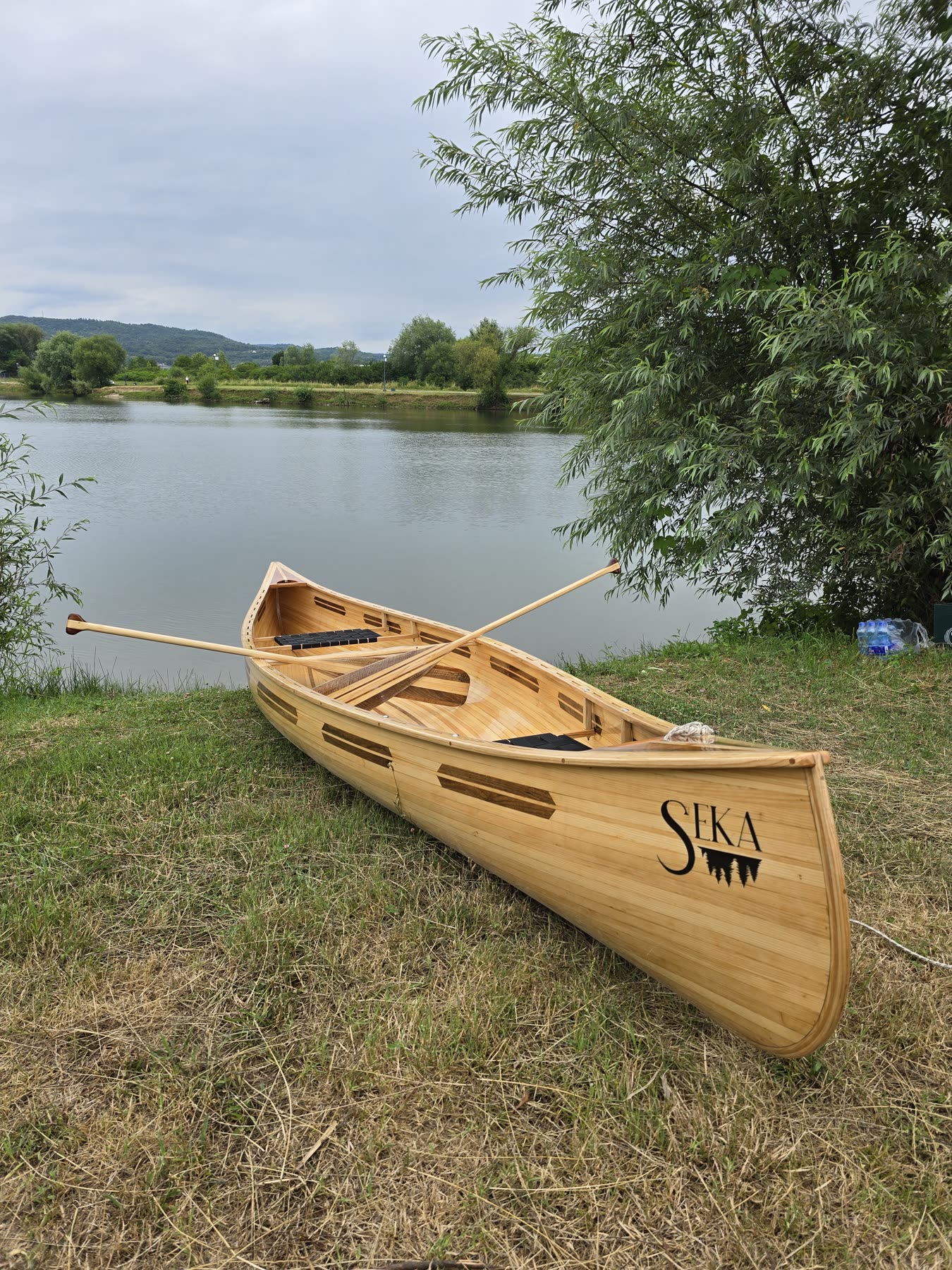
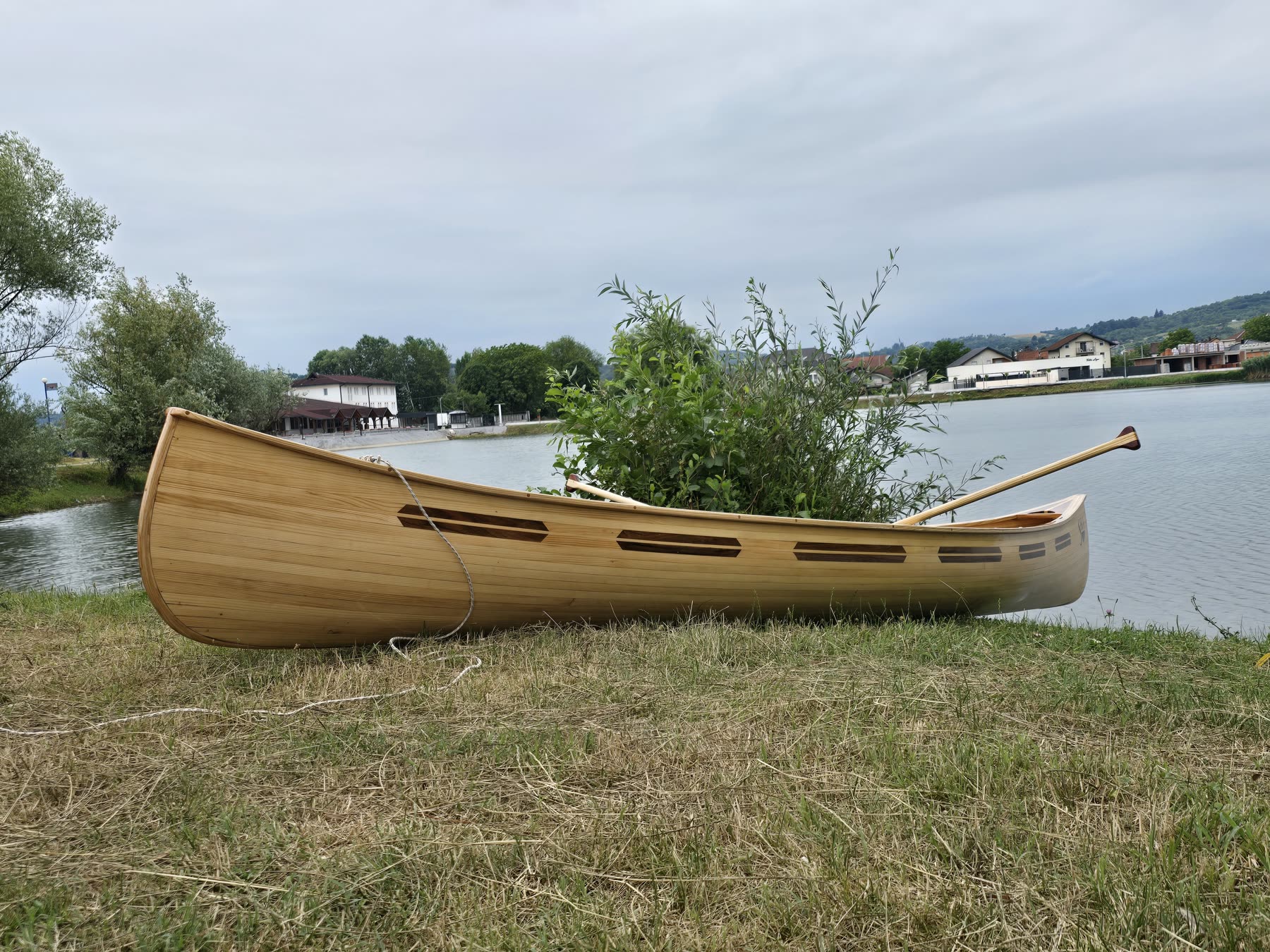
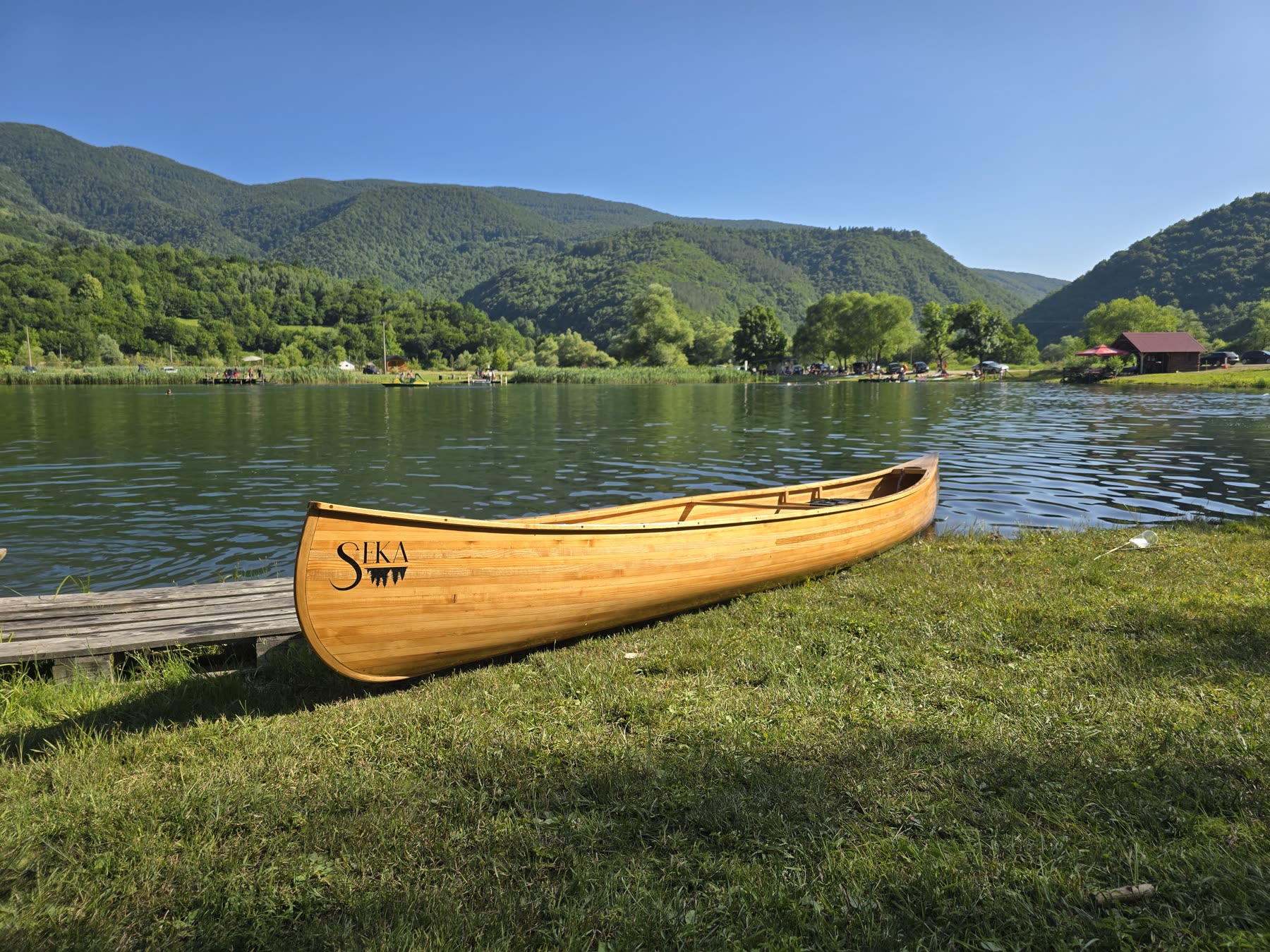
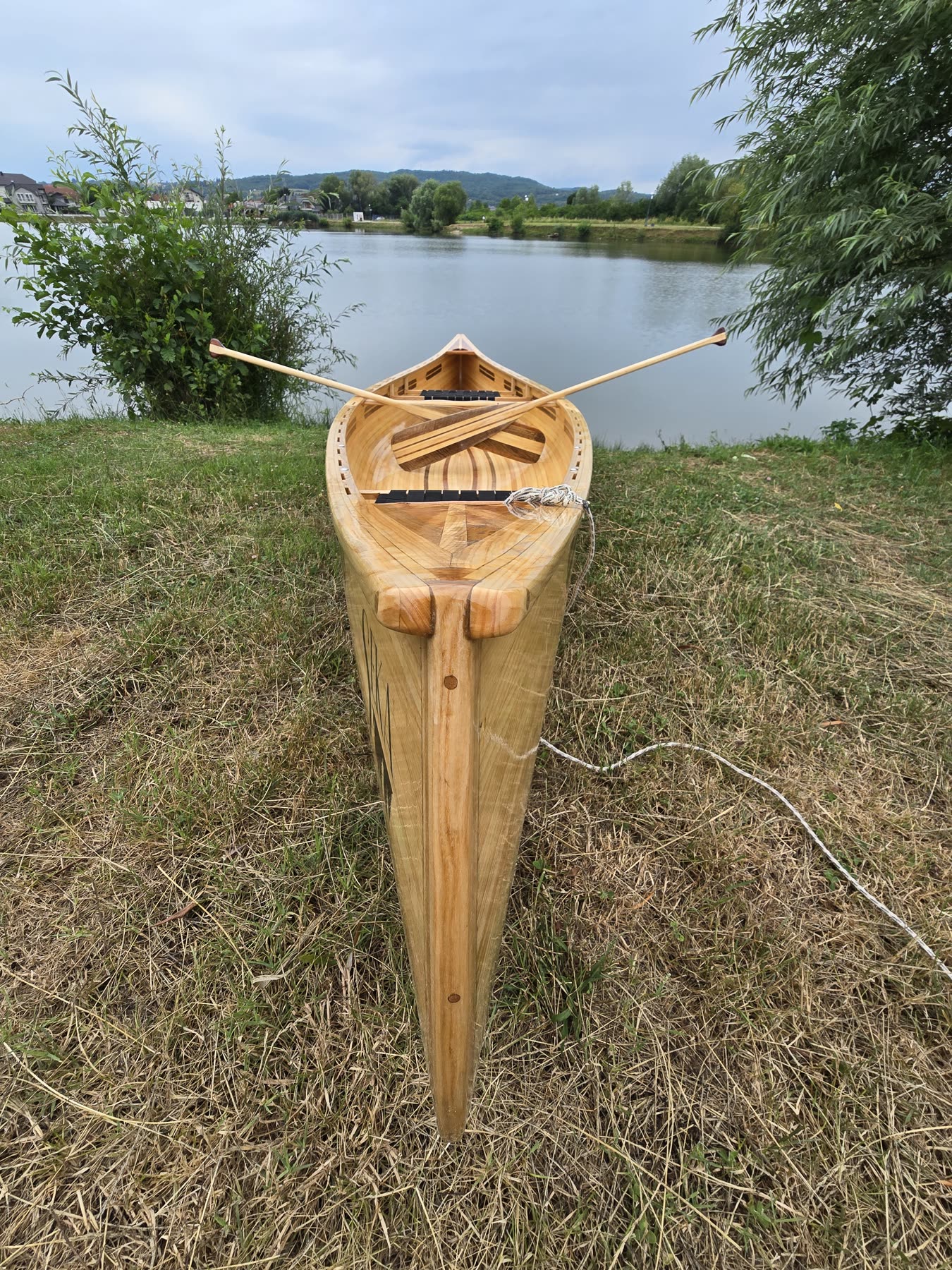
Finished canoe on a lake shore, paddles crossed over the hull

The hull is strip-built: thin strips laid edge to edge, then reinforced with fiberglass cloth and epoxy resin. That makes it strong, yet it looks like a piece of furniture that floats.

Lake, river, rapidsAt home on calm and fast water
FiberglassGlass cloth and epoxy resin
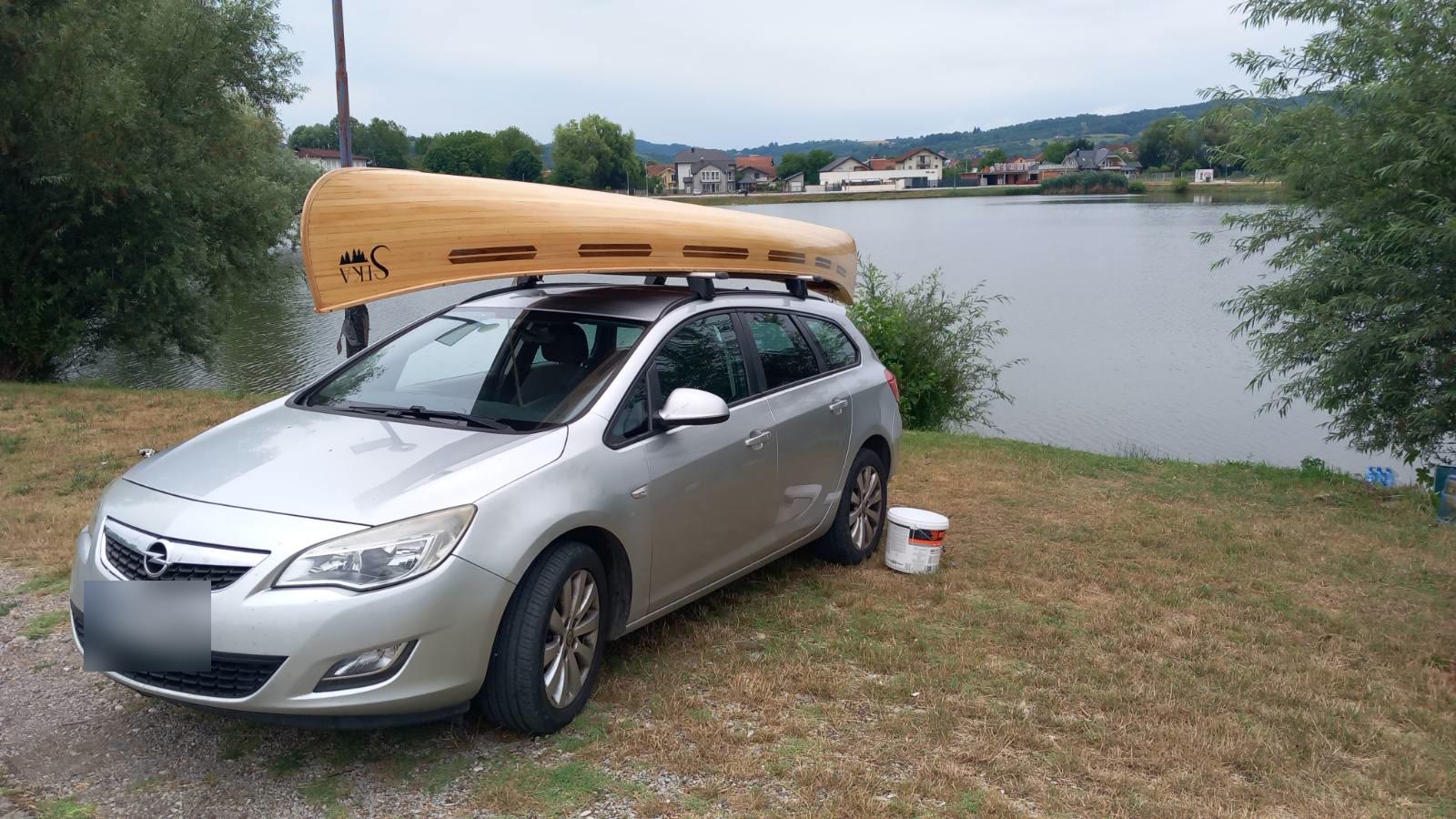
On the car roofFits a standard roof rack
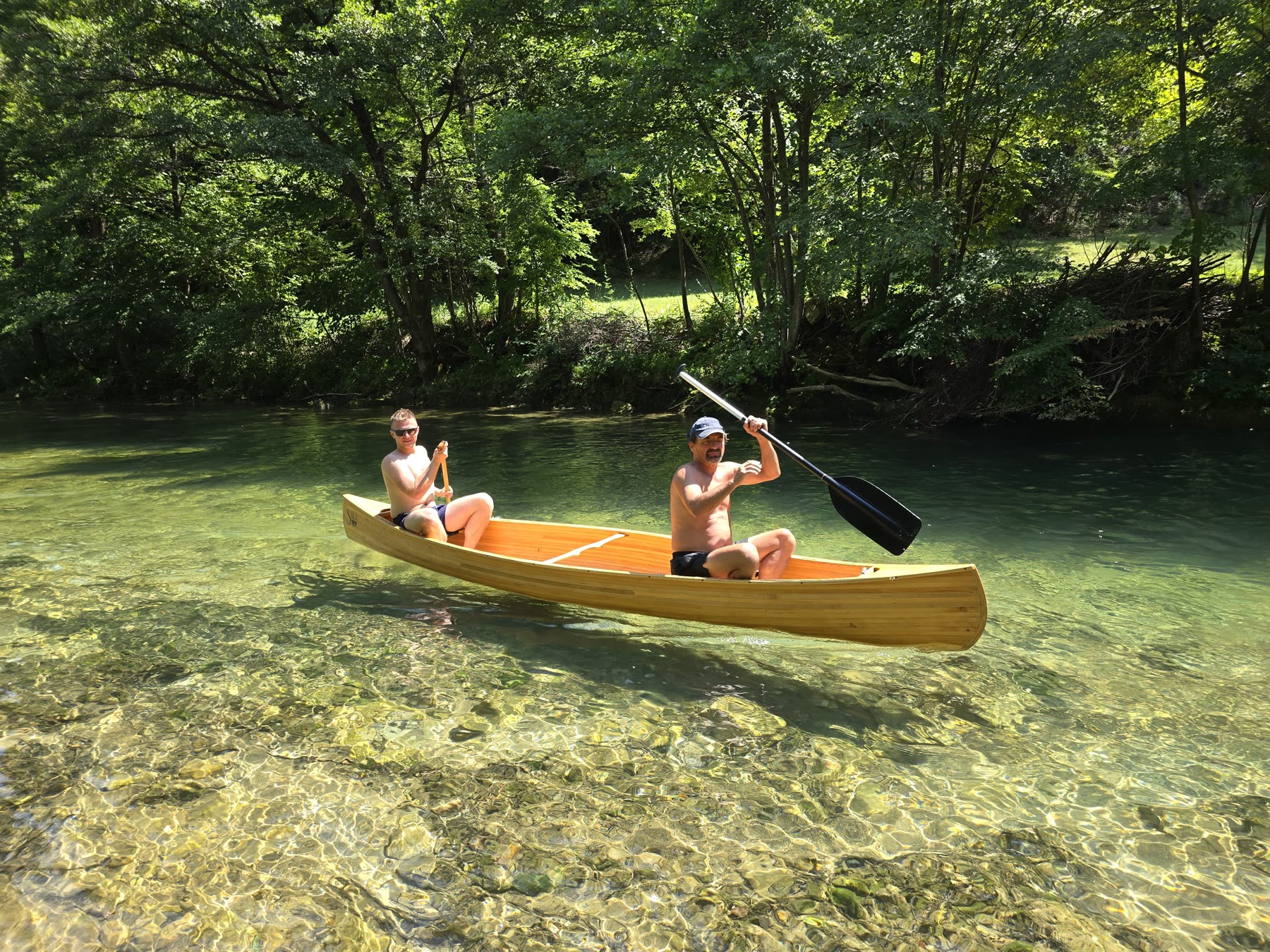
On the water

For calm and fast water.

The canoe is suited to lakes, rivers and rapids. Its fiberglass-reinforced hull can take faster water too.

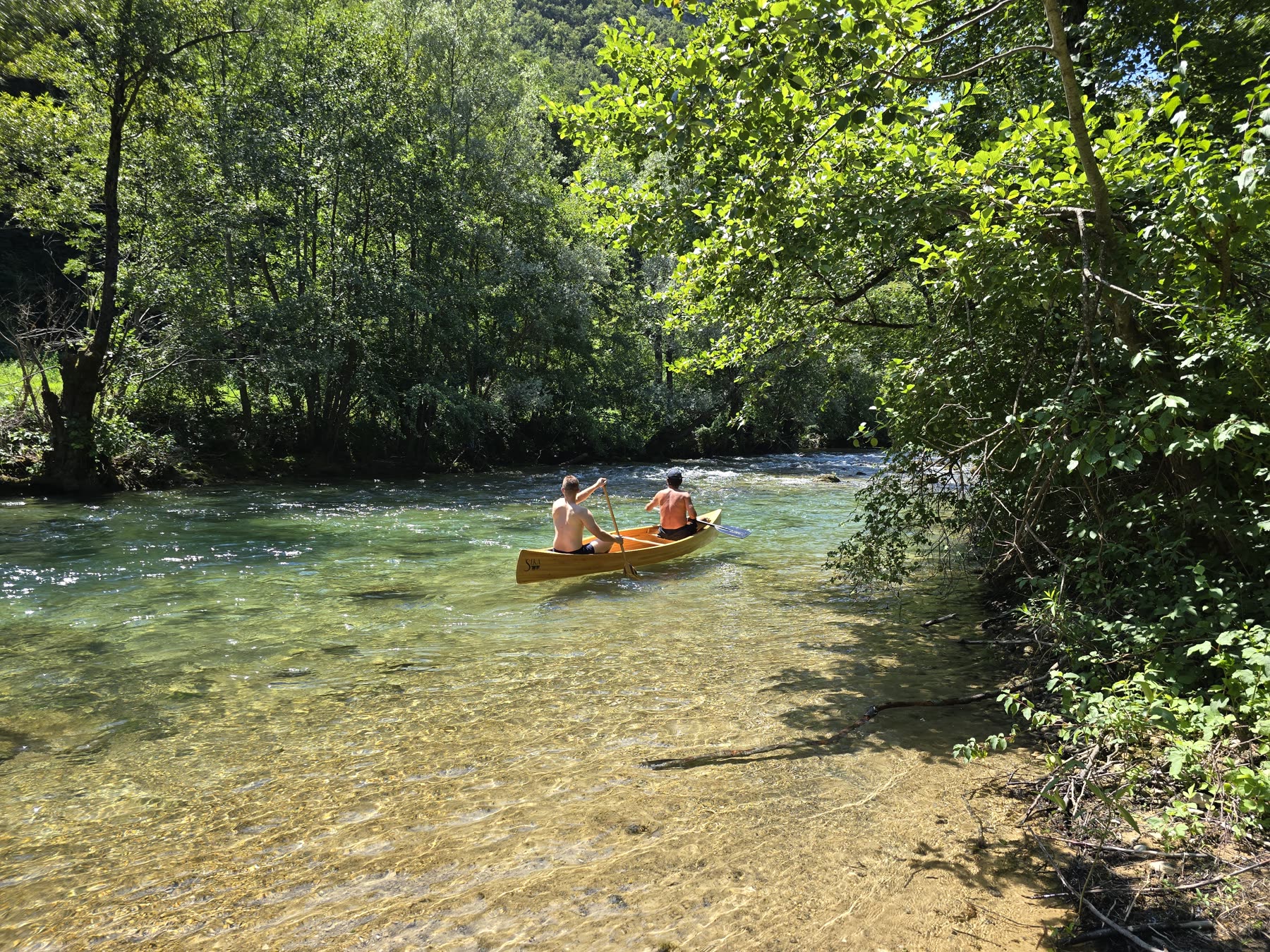
Two men paddling the canoe on a crystal-clear river
River
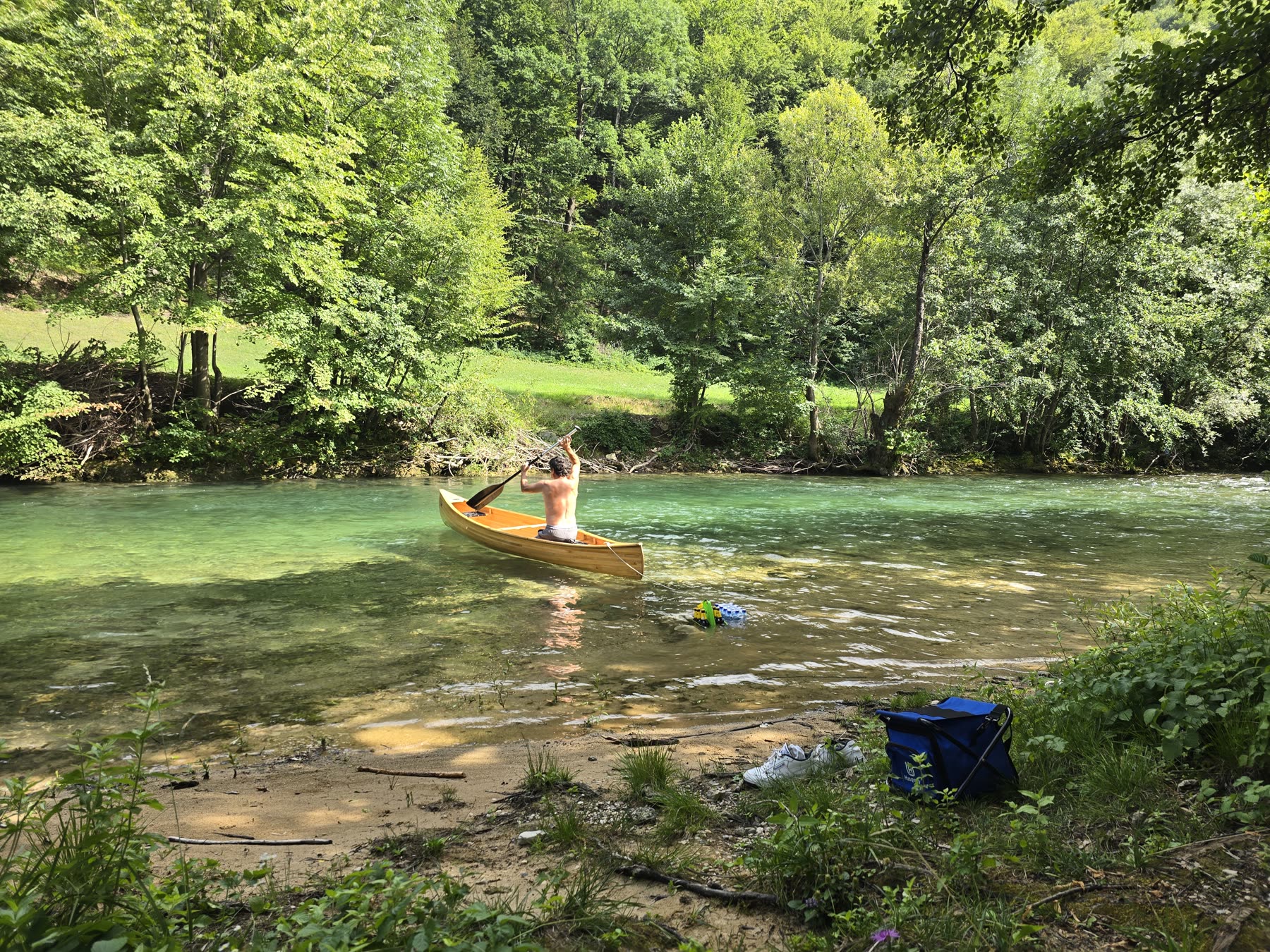
Paddler in the canoe on a turquoise river
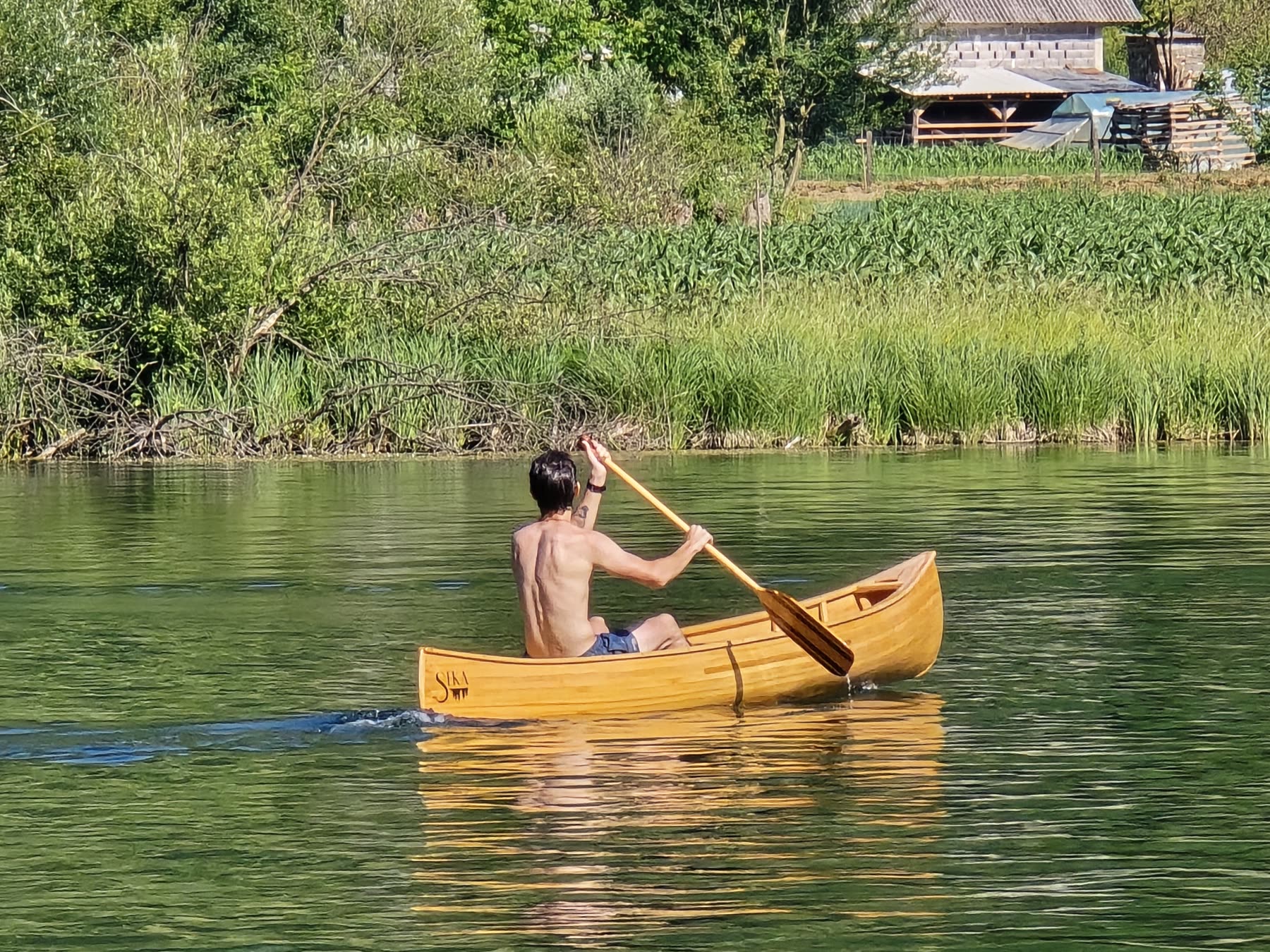
Paddler in the canoe on the green water of a lake
Lake
Two men paddling down a river through the forest
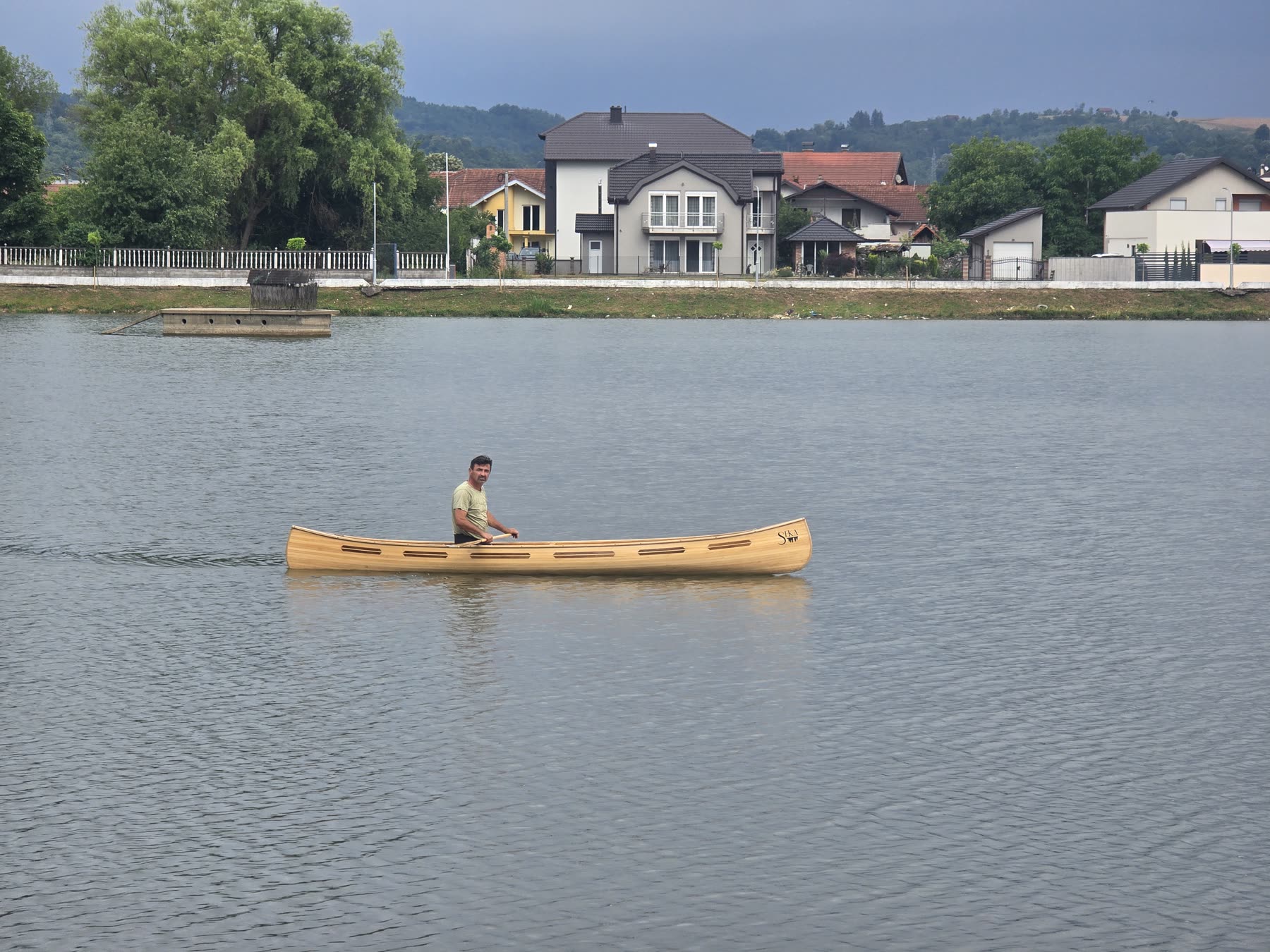
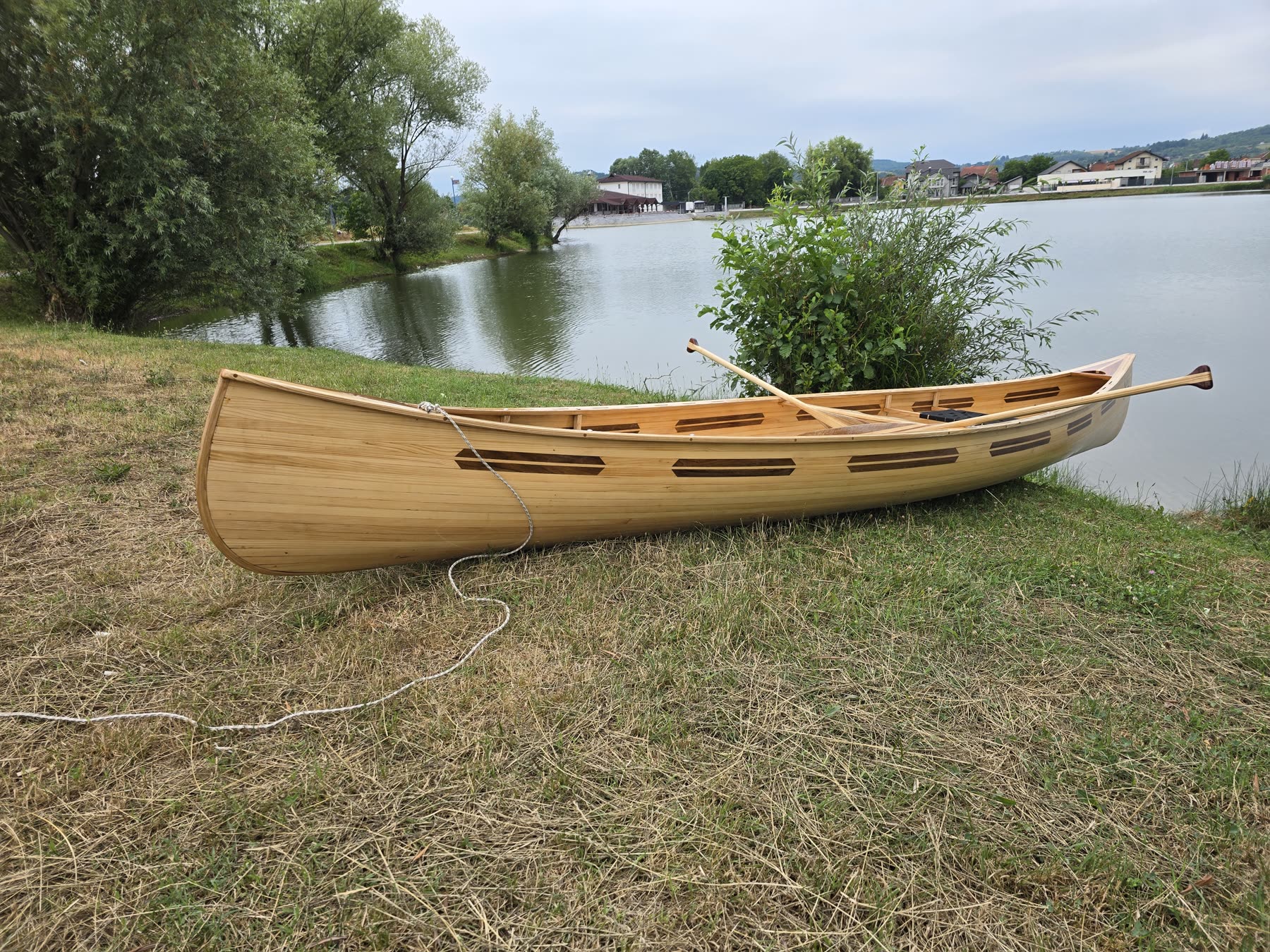
Canoe with dark inlays on a calm lake
Canoe on the shore, paddles resting against the hull
Canoe on a car roof rack beside a lake
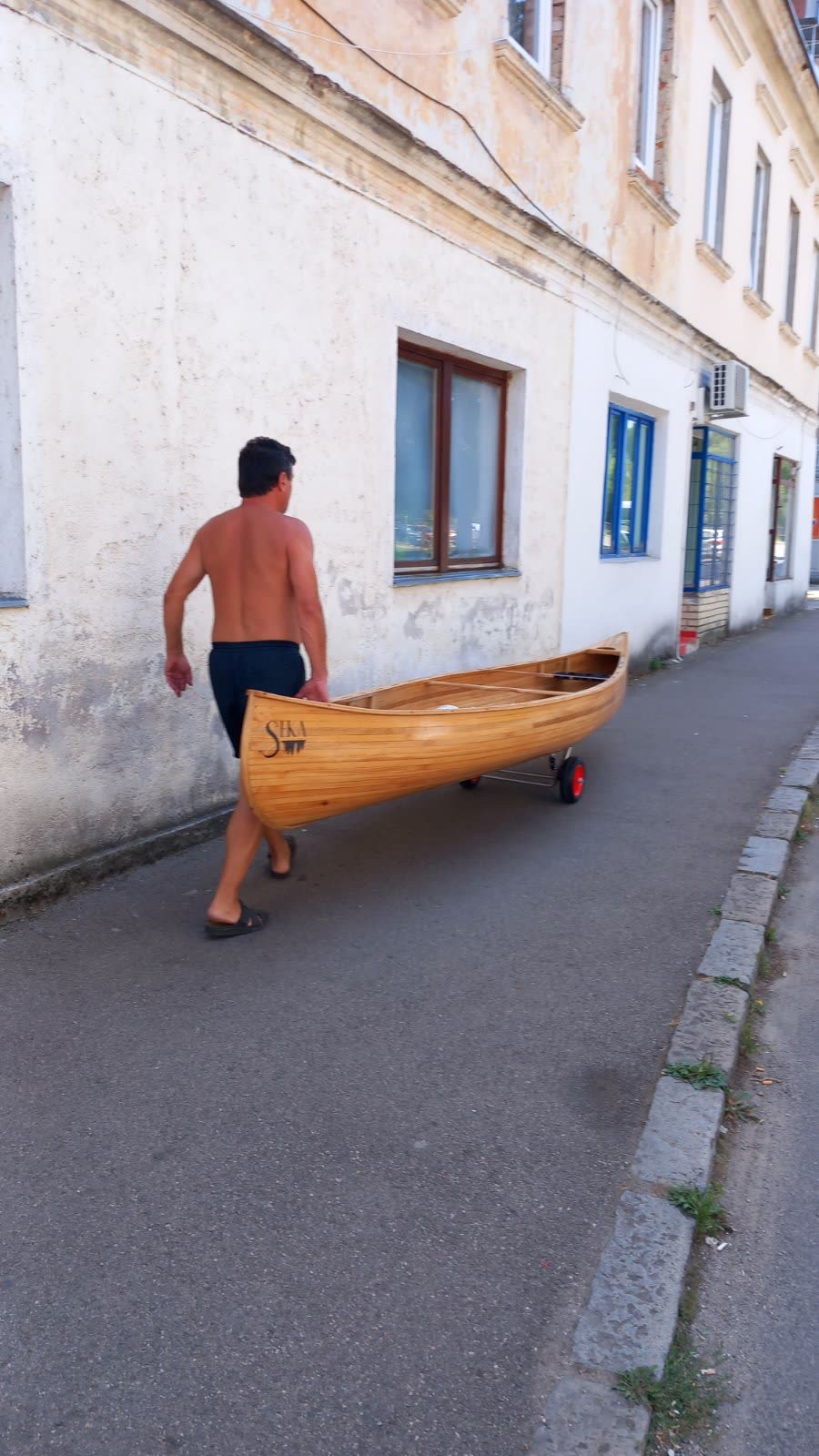
Canoe on a cart, pulled by one person
Transport

Onto the roof, then onto the water.

How do you transport a canoe?

The canoe fits a standard car roof rack. It weighs 35 kg, so one person can get it to the water, on their shoulders or on a cart. No trailer needed: lift it onto the roof, strap it down and drive to the lake, the river or the rapids.

The build

Seven steps
to the water.

How is a wooden canoe built?

Scroll slowly. The picture changes with every step, just as the canoe changed in the workshop.

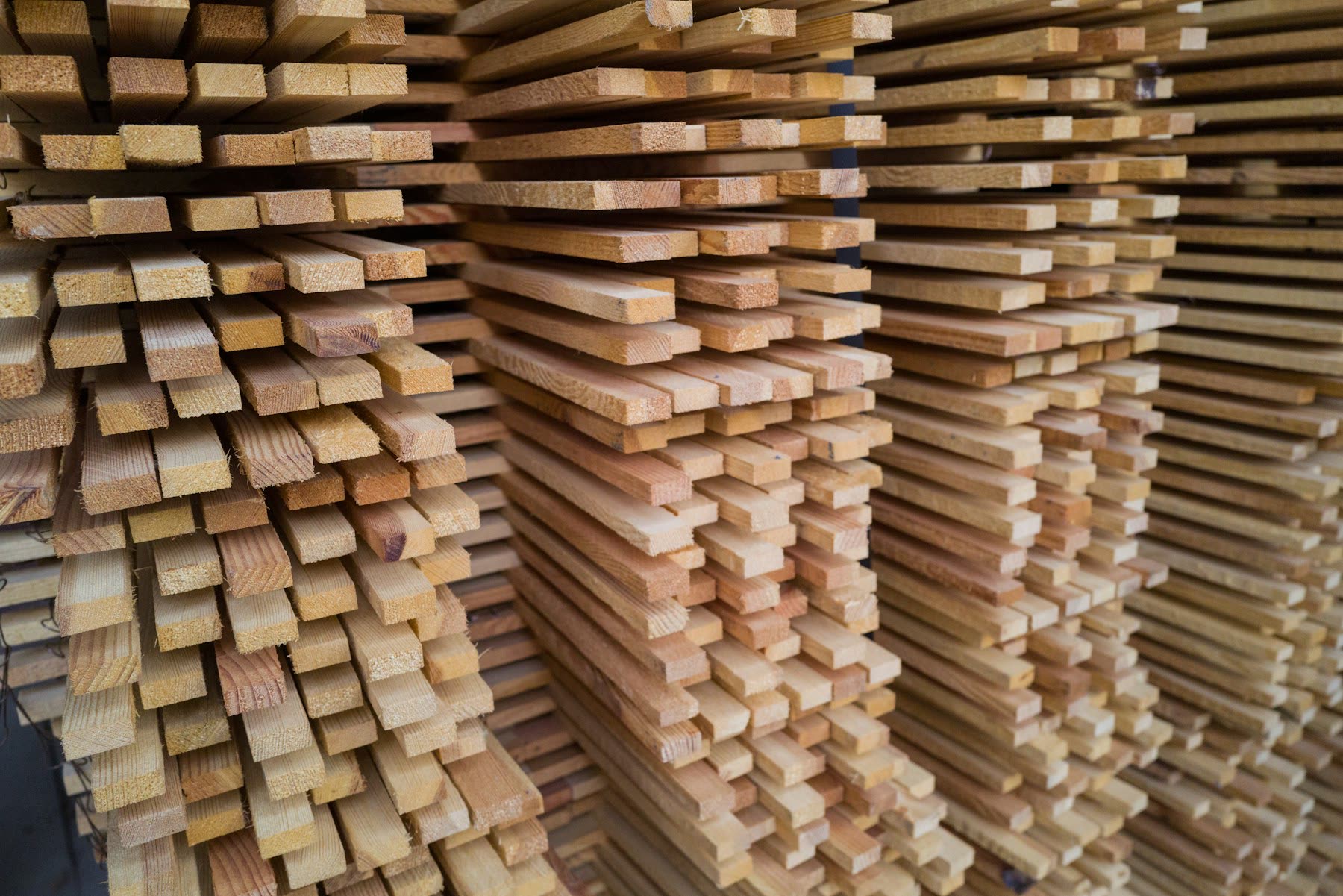
  1. Thin wooden strips stacked in piles
    Step 01

    Cutting the strips

    Boards are cut into long, thin strips of equal width and thickness. The light ones go into the hull; the dark ones are kept for the decorative stripes.

  2. Building form with strongback and station molds, a bent stem at the bow
    Step 02

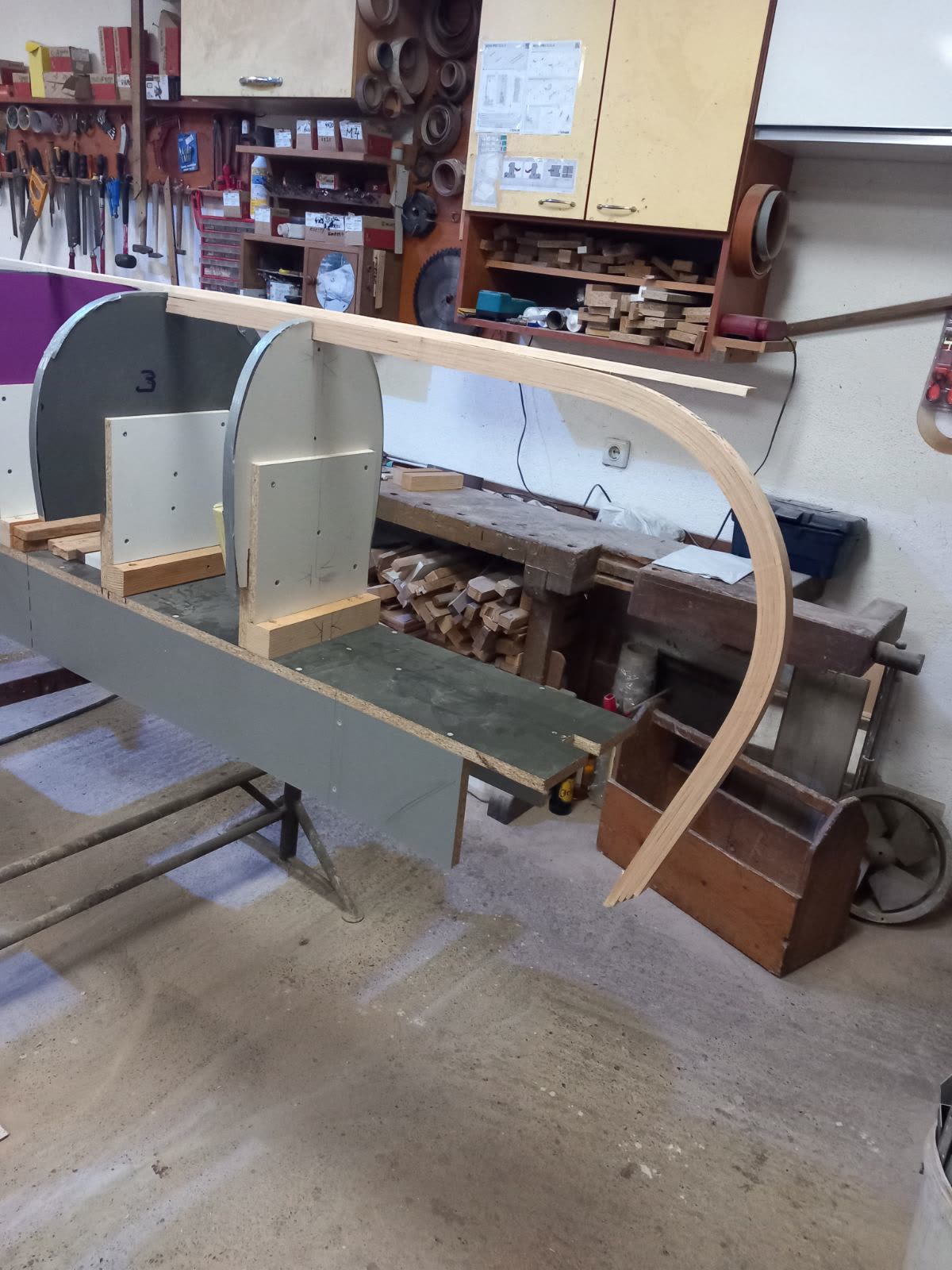
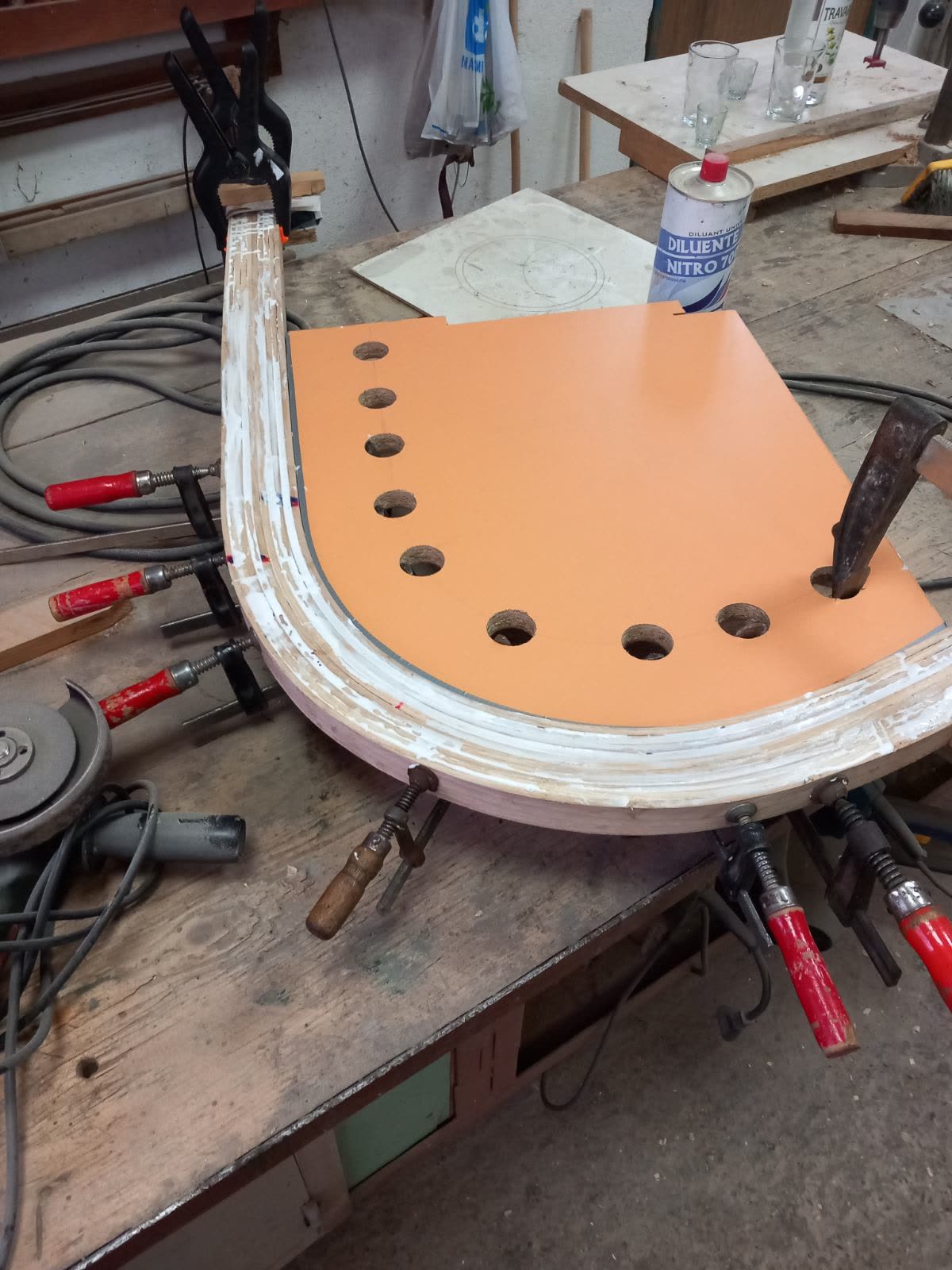
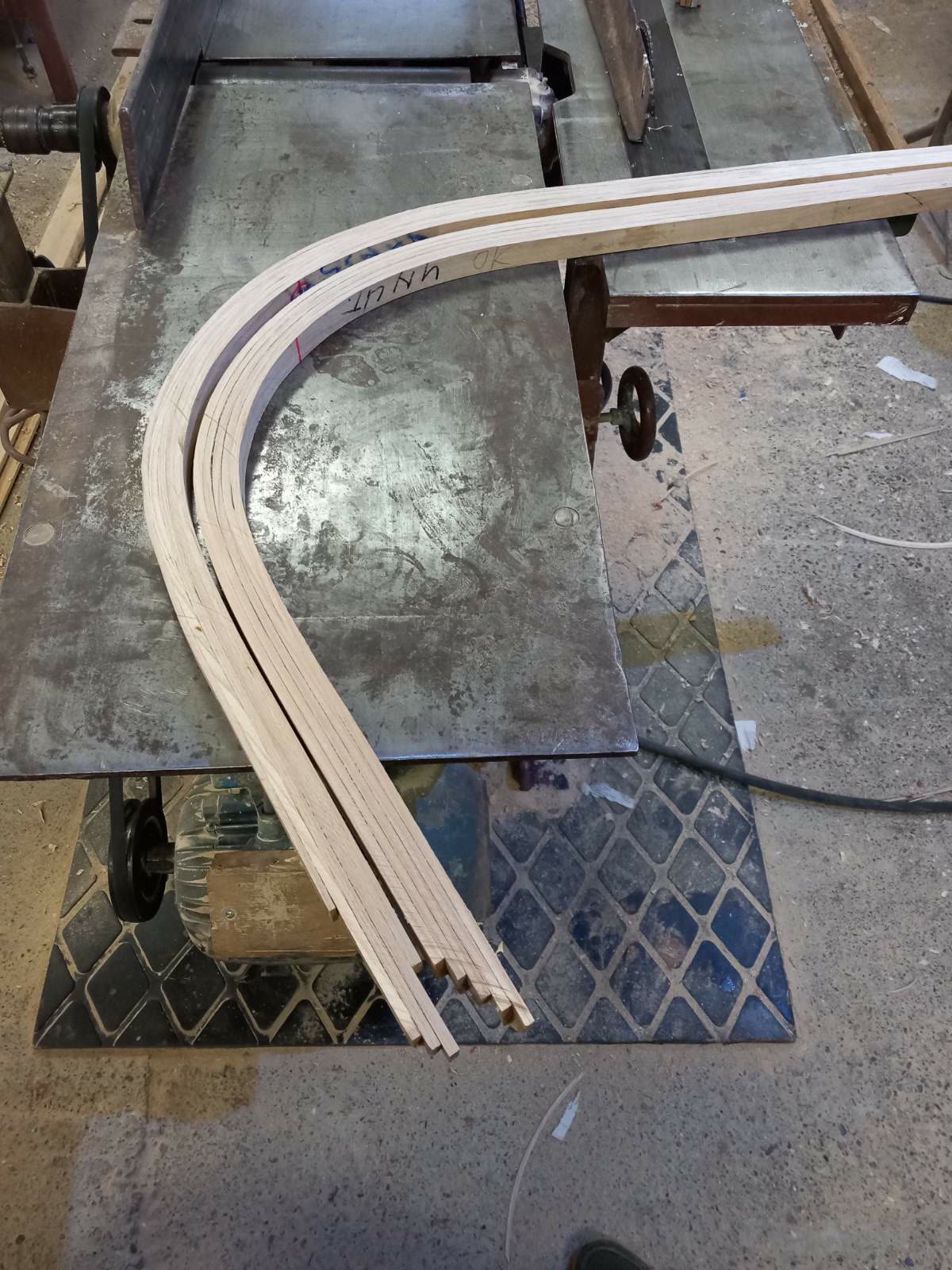
    The form and the stems

    The building form, the “fishbone”, is a strongback with cross-section molds cut to the plans. Bow and stern each get two stems, an inner and an outer one. They are made from thin strips that are first “boiled”, then bent over a form and glued. The hull strips are glued to the inner stem; the outer stem goes on over it once the hull is “closed”.

    A stem being glued up from strips on a bending form, held with clamps
    Two finished stems made of glued strips
  3. Strips glued up on the form, held by clamps
    Step 03

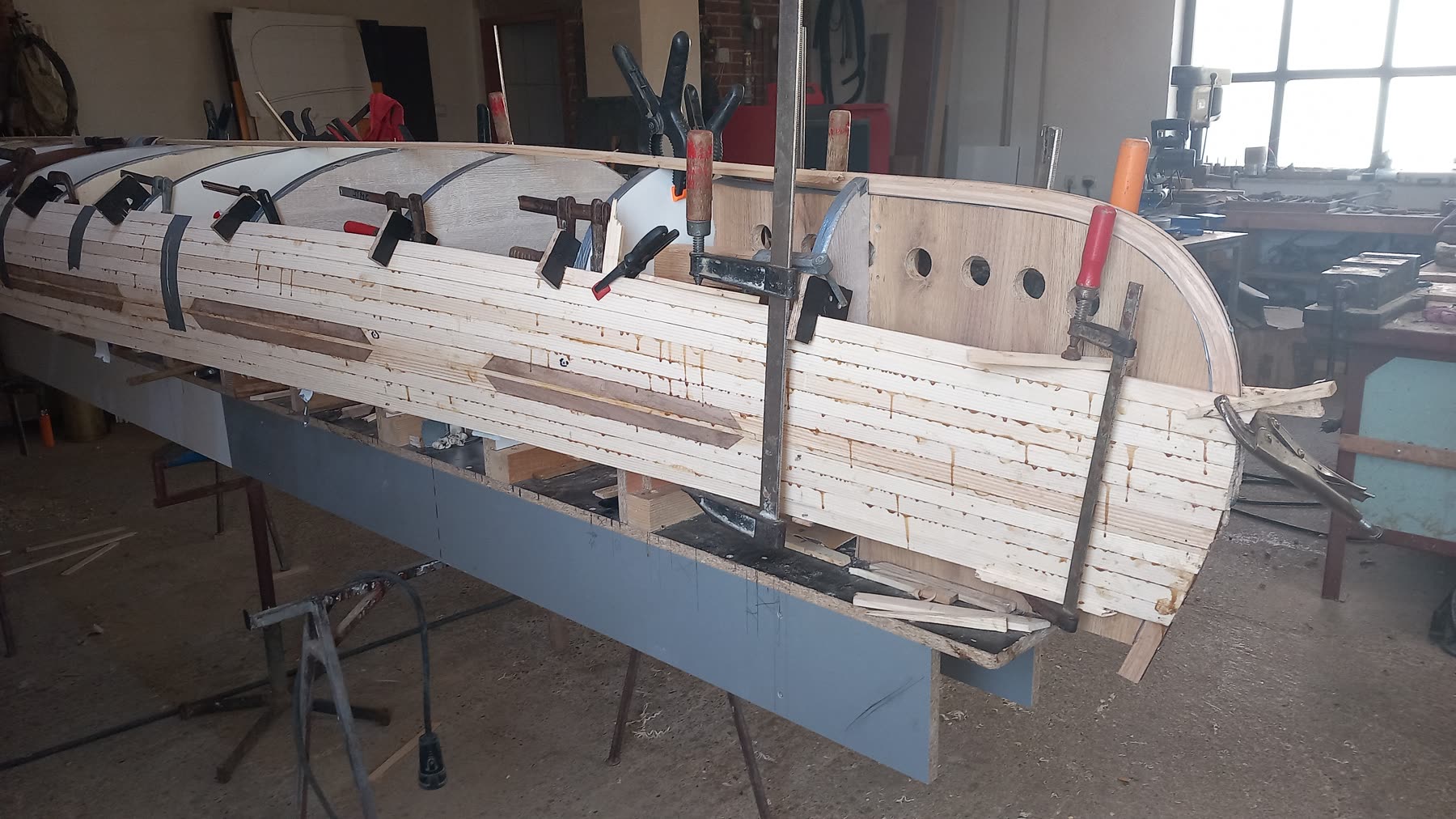
    Strip by strip

    The strips are laid over the molds one at a time. Each is glued to the one before it and clamped until the glue dries.

  4. Fiberglass cloth laid over the hull on the form
    Step 04

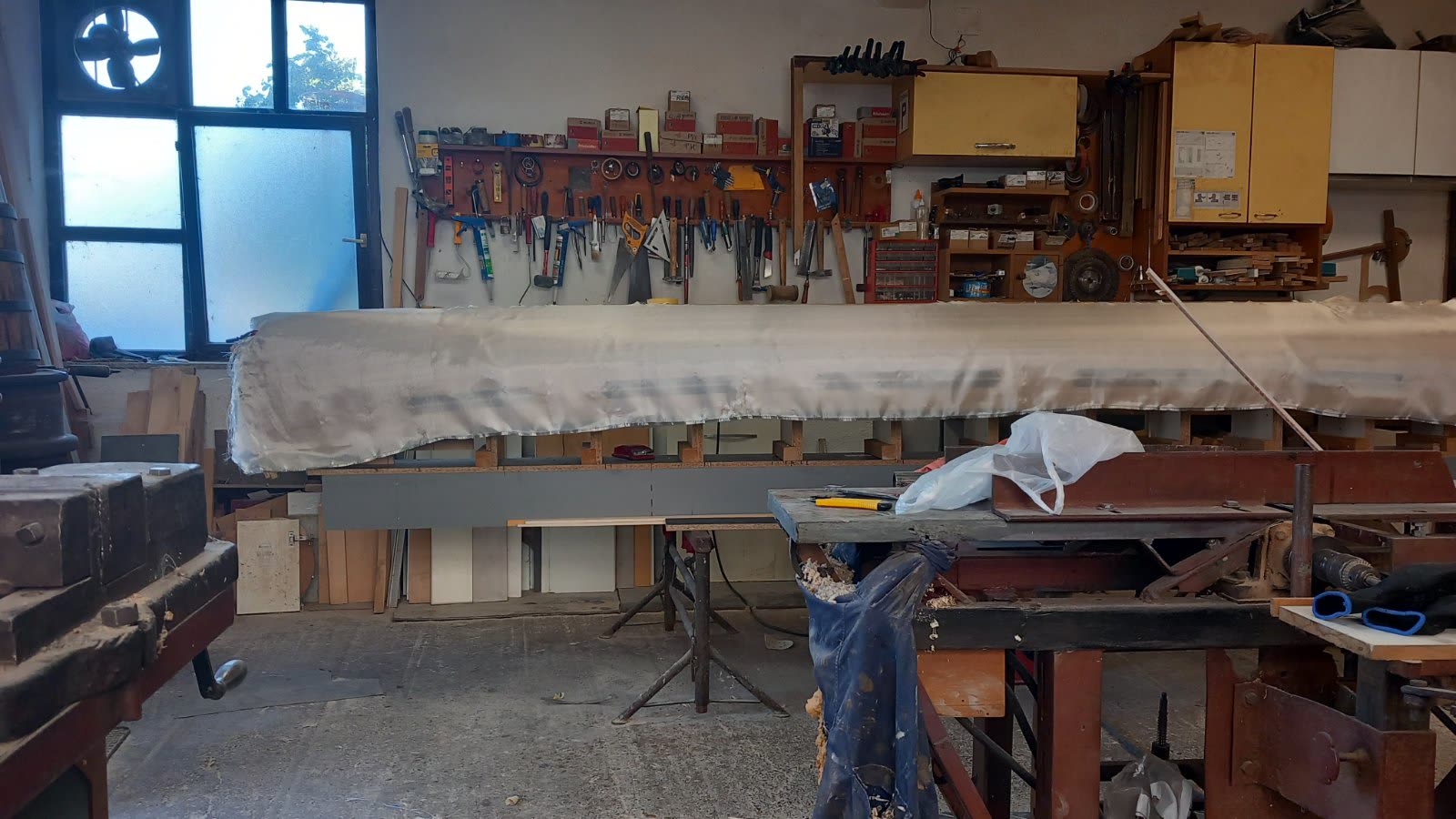
    Fiberglass and epoxy outside

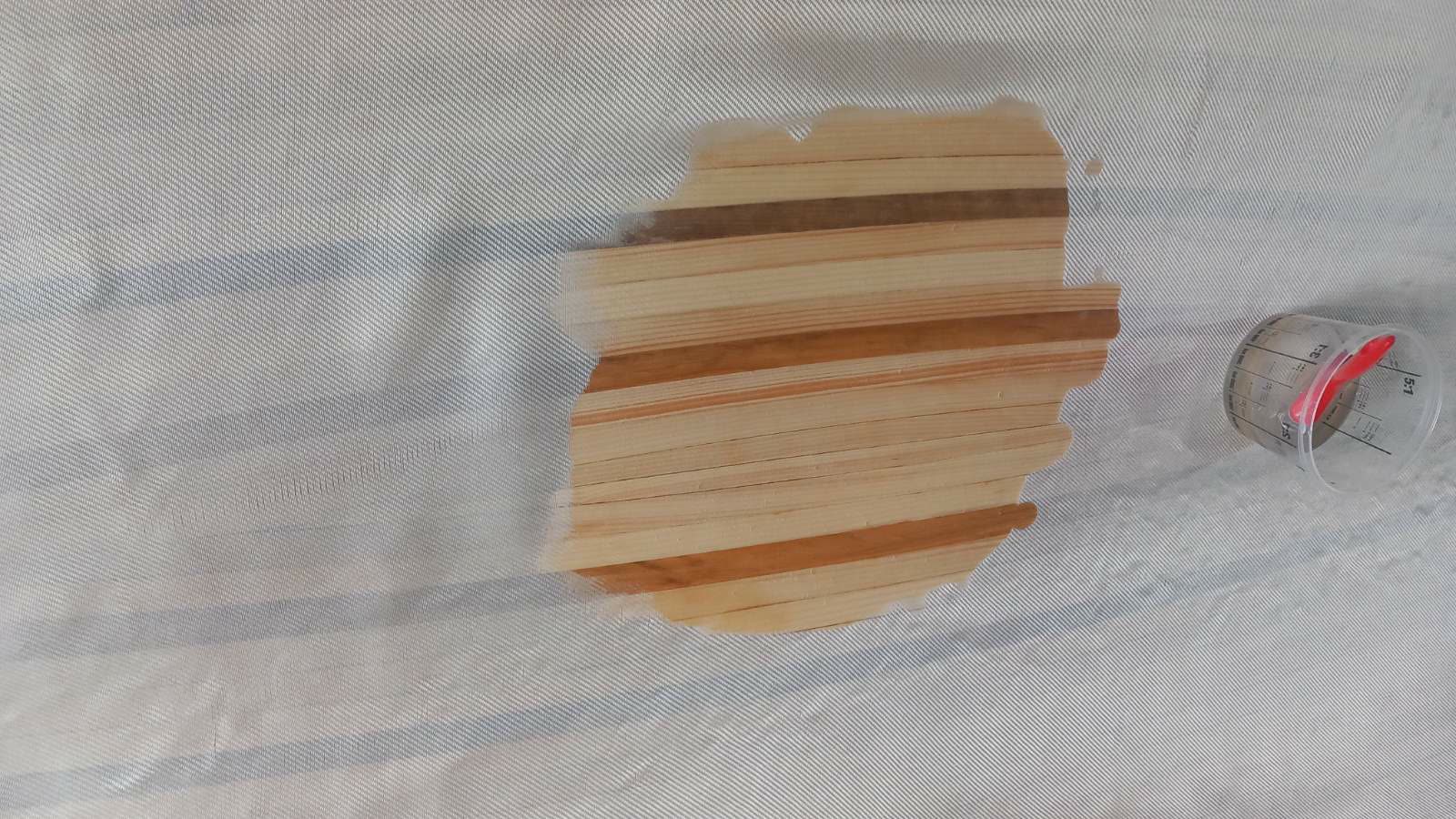
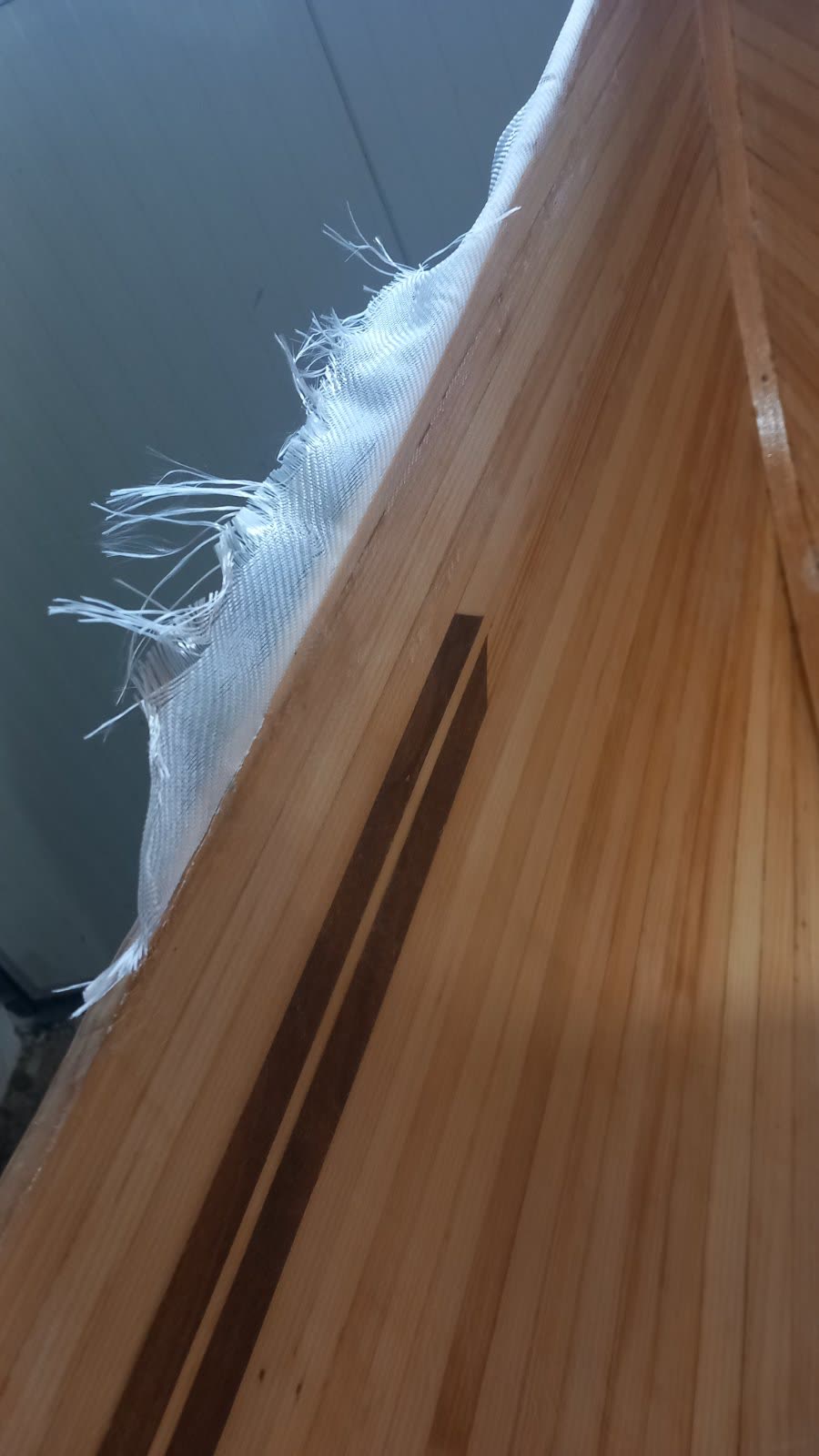
    While the hull is still on the form, it is sanded and covered with fiberglass cloth soaked in epoxy resin. Together they form a fiberglass skin: the cloth turns clear, the wood stays visible, and the hull gains strength and keeps the water out.

    Epoxy resin soaks into the fiberglass cloth and turns it clear
    Edge of the fiberglass cloth over the hull strips
  5. Hull taken off the form and turned over
    Step 05

    Off the form

    Once the epoxy has cured, the canoe comes off the form and is set on “soft” cradles.

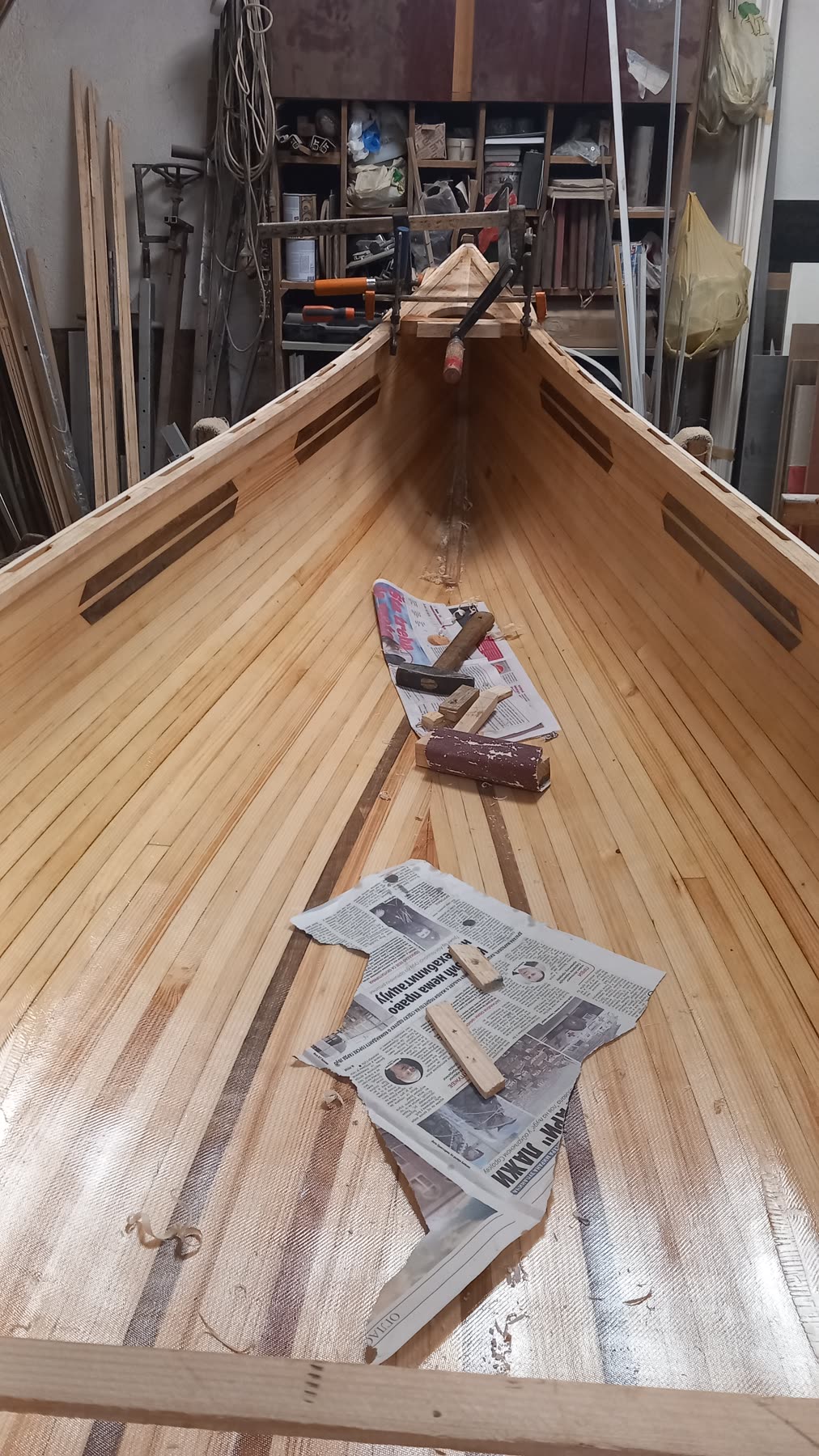
  6. Inside of the hull during sanding
    Step 06

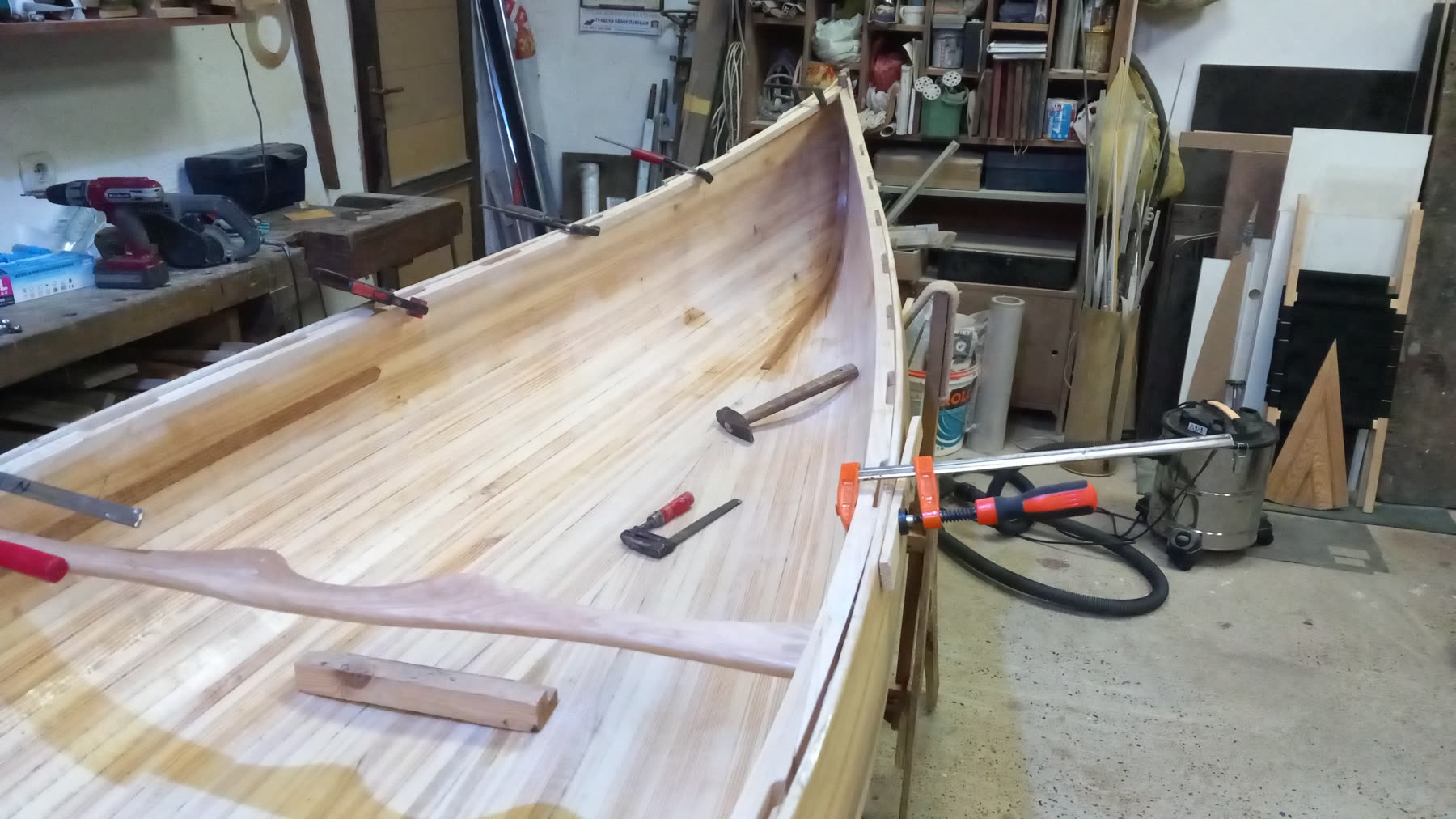
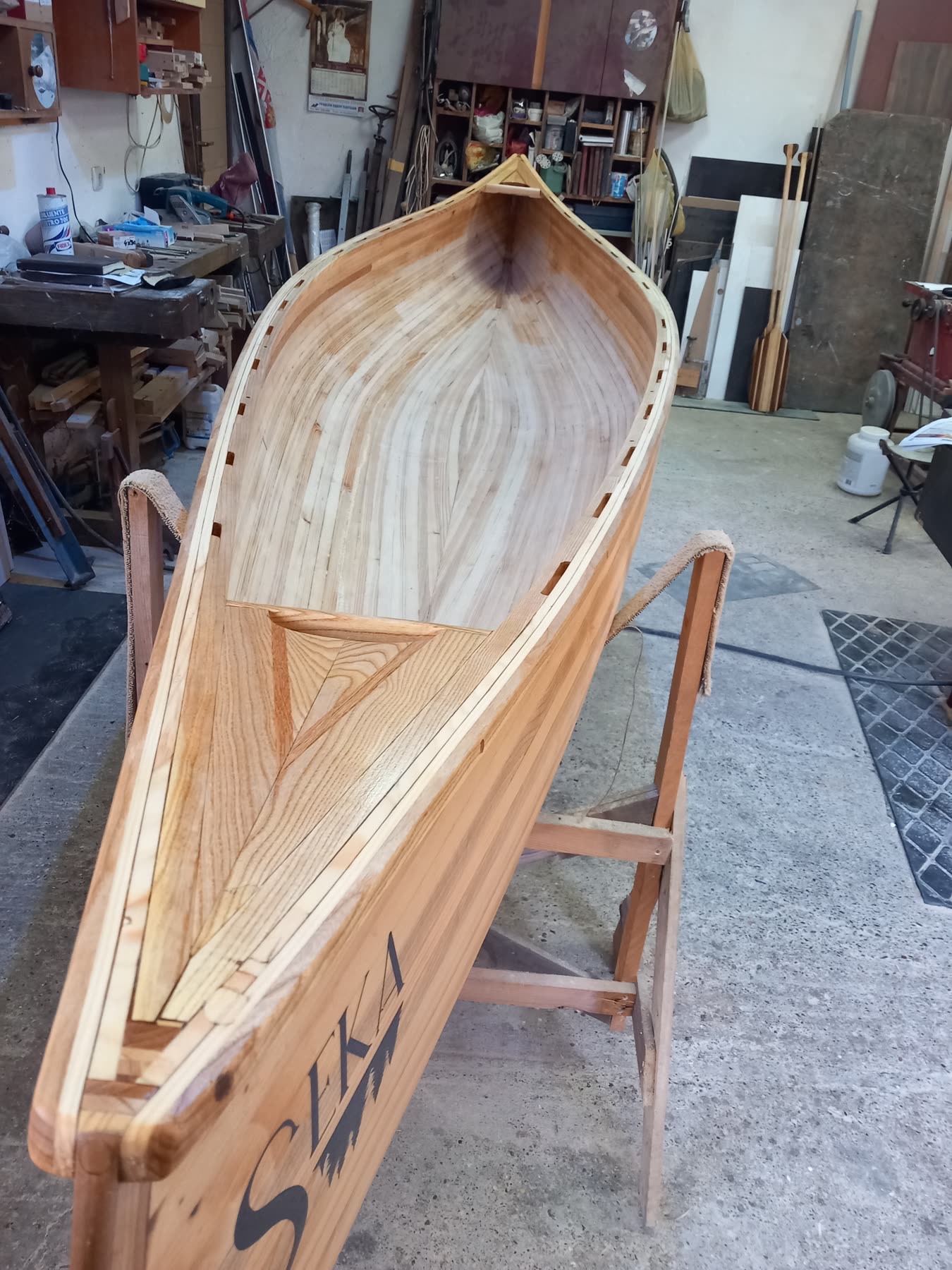
    Sanding the inside

    Only now is the canoe seen from the inside for the first time. The interior is sanded and prepared for fiberglass and epoxy on the inside.

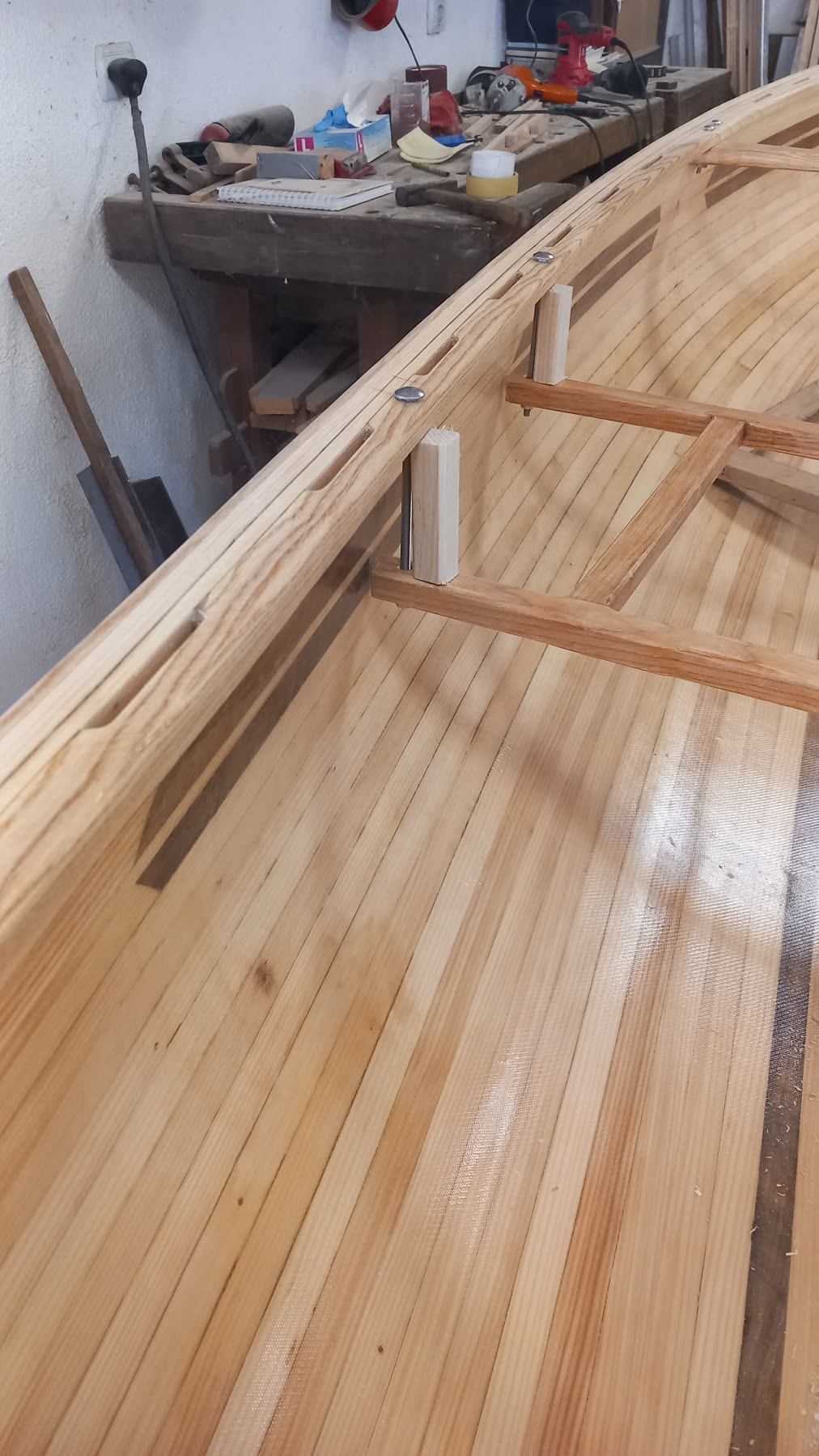
  7. Gunwales with elongated slots and a seat frame
    Step 07

    Gunwales, seats and paddles

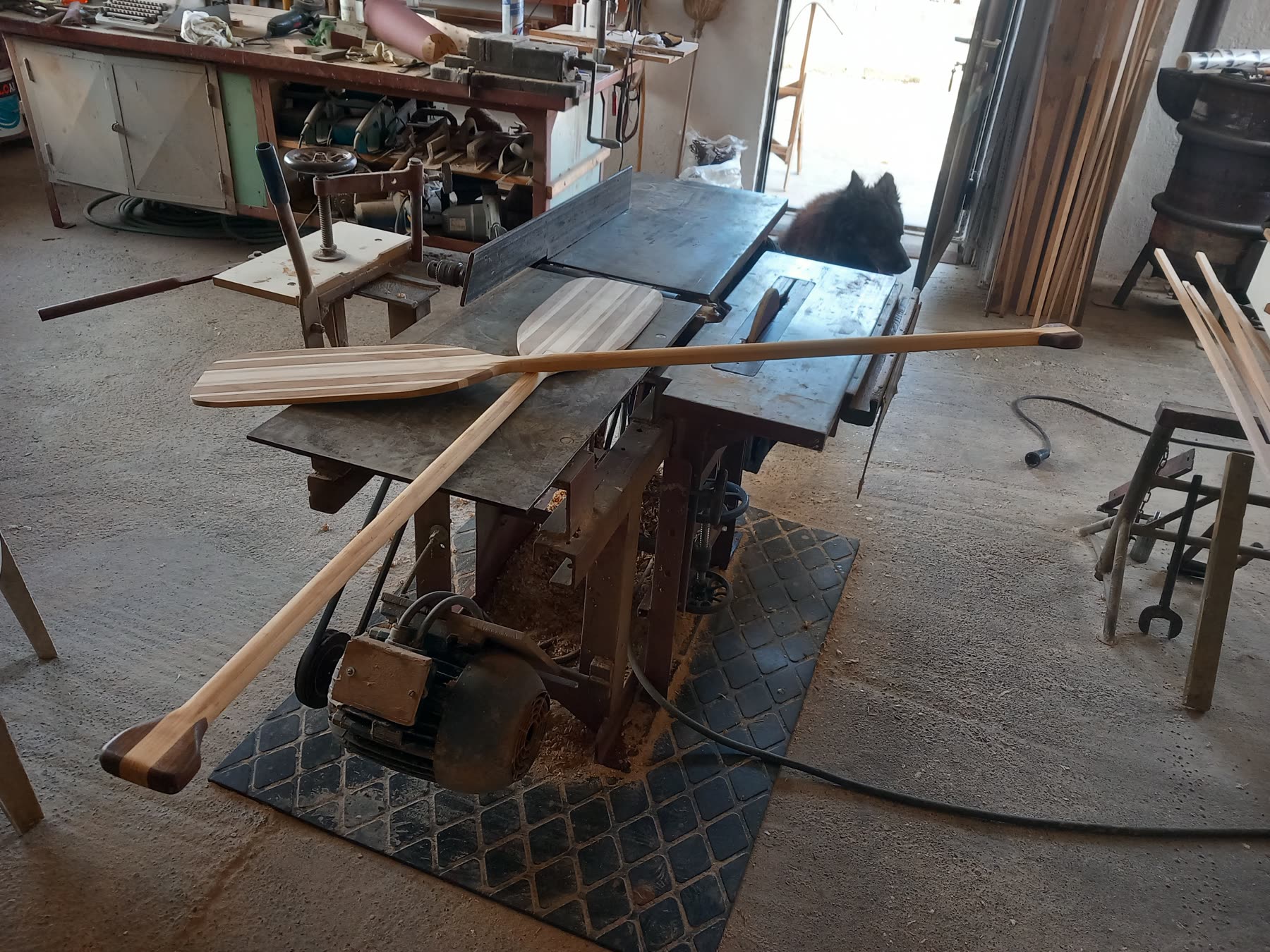
    Once the epoxy on the inside has cured too, the decks and gunwales are made. The inner gunwales have elongated slots that let the water drain when the canoe is turned over, while the outer gunwales give the canoe its final stiffness. The seats and the center thwart for carrying are made alongside: one person rests the thwart on their shoulders and carries the canoe, which weighs 35 kg in total. The paddles are handmade too, with the same dark stripes.

    Deck and varnished interior
    Two handmade paddles
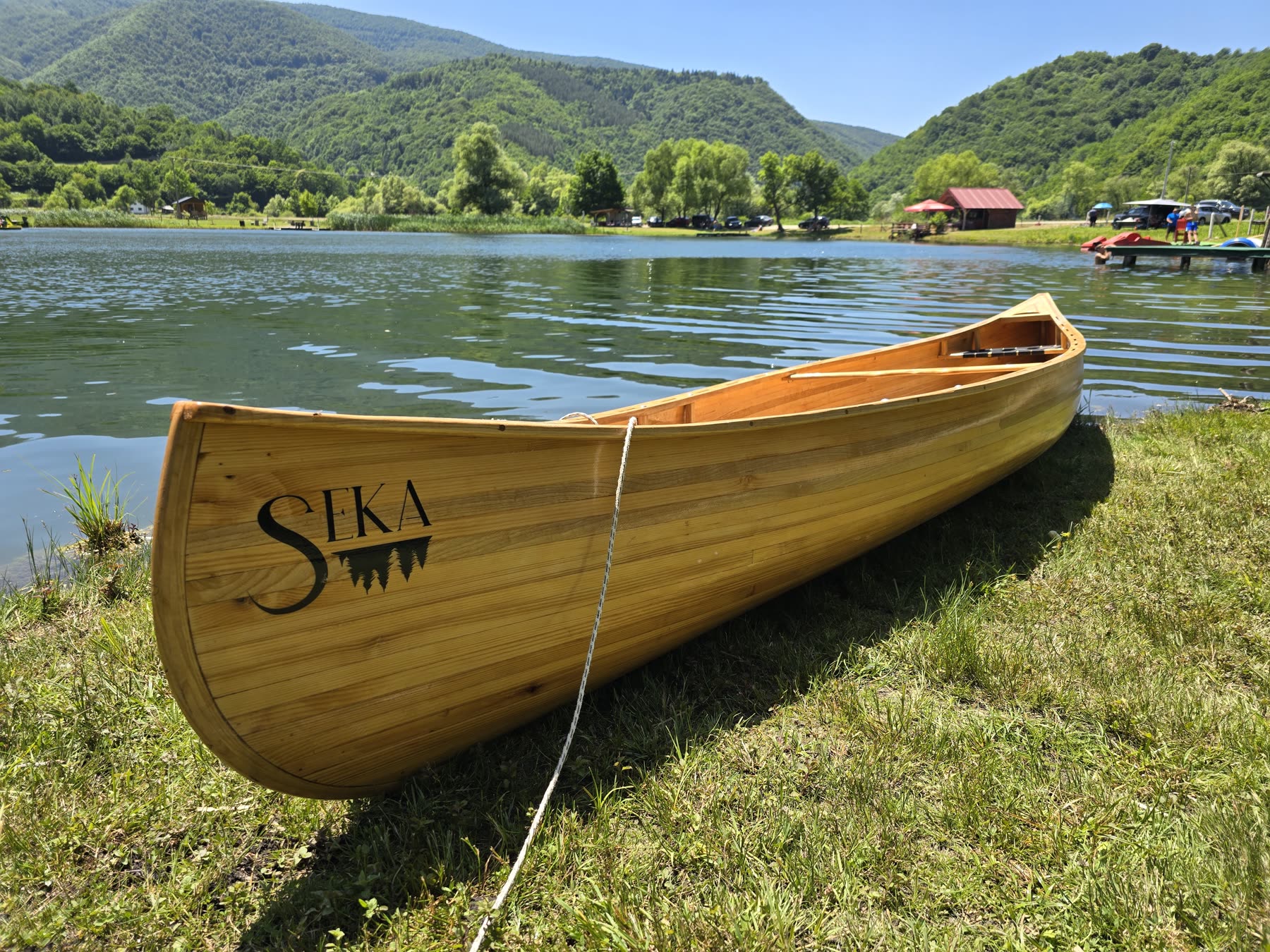
Finished canoe on a lake shore beneath green hills

From wood to water.

The finished canoe

The canoe, up close.

Click a photo to open it full screen.

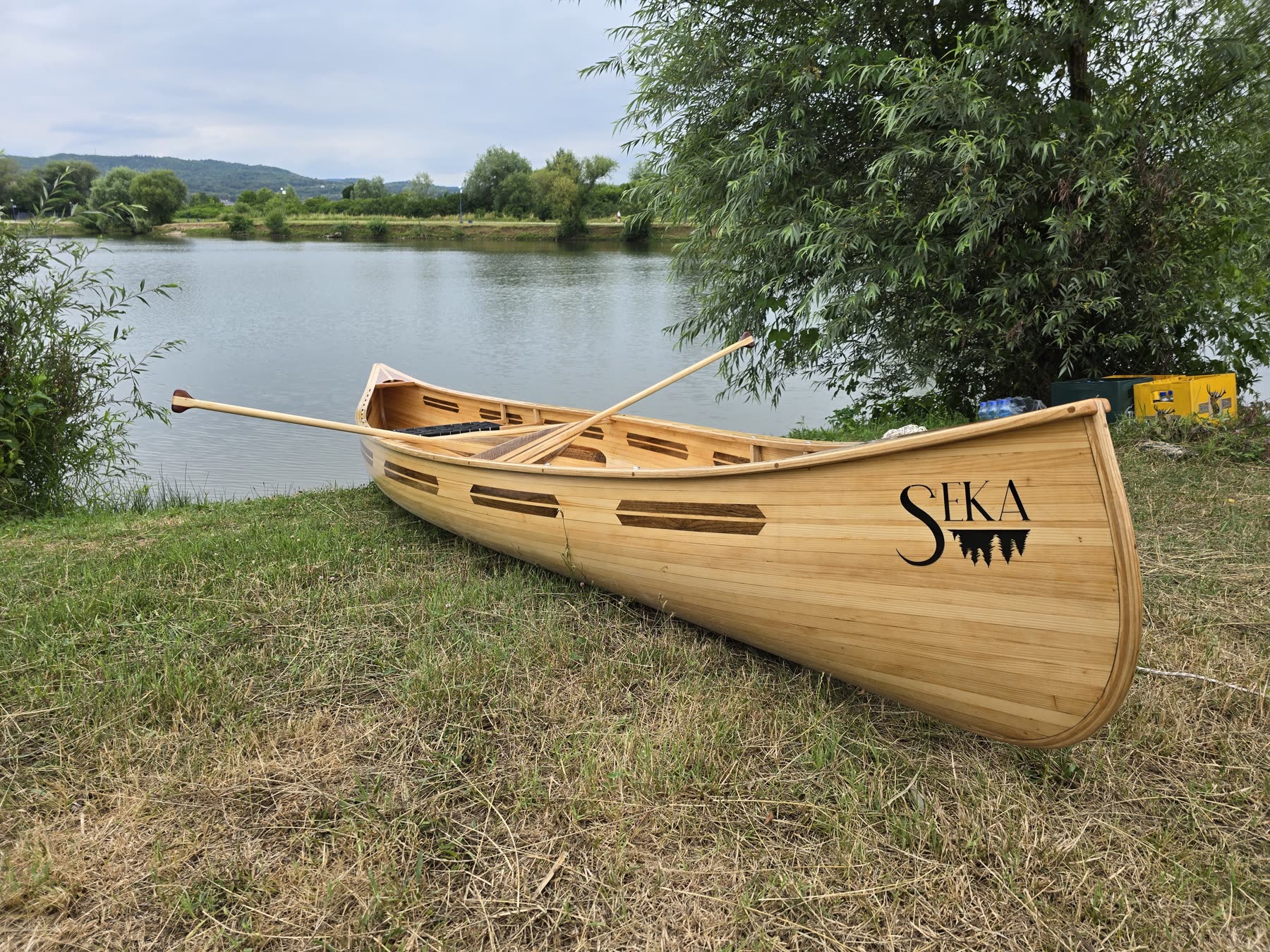
Canoe on a lake shore, logo on the bow and crossed paddles
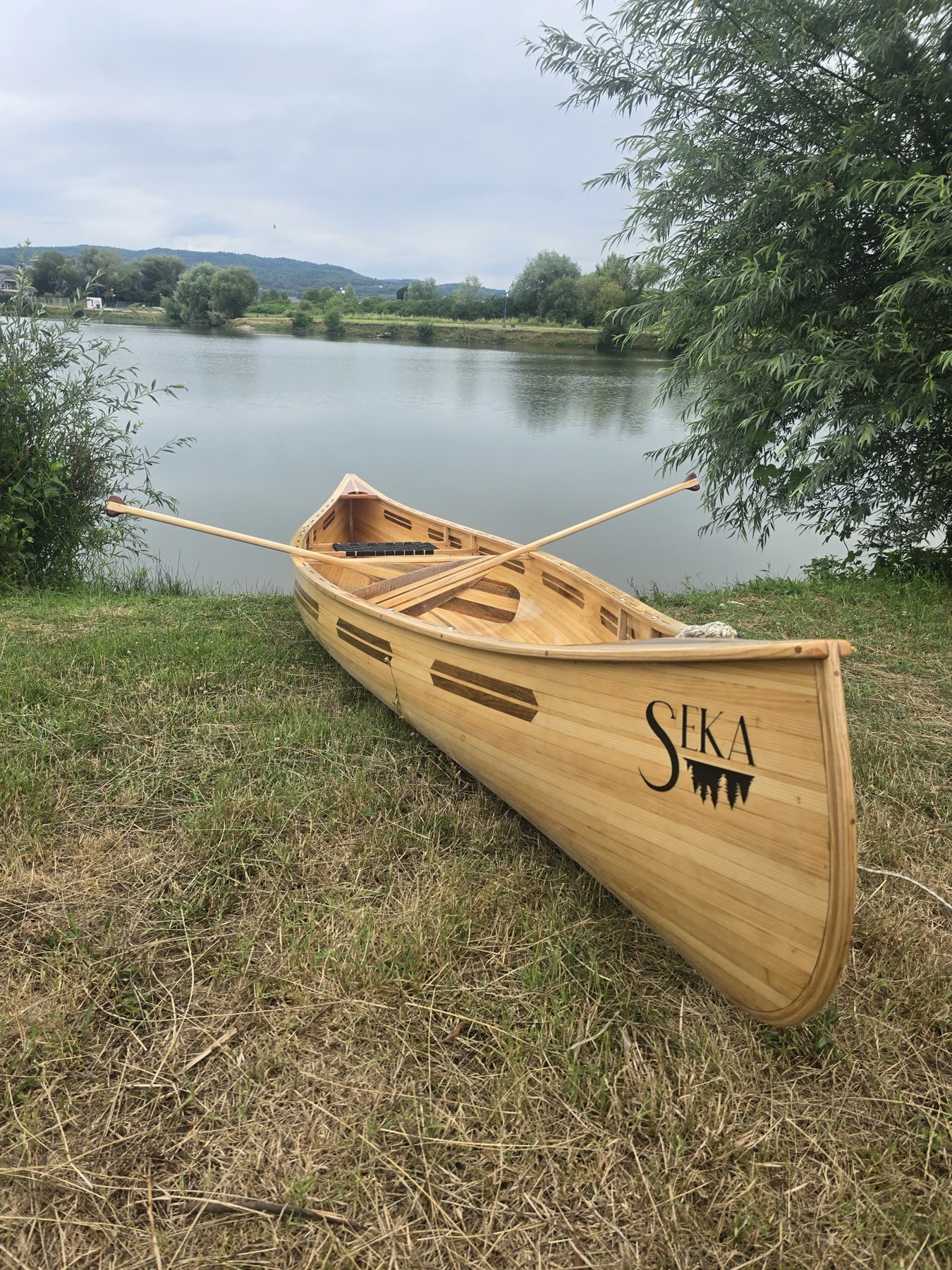
Canoe seen from the bow, the lake behind it
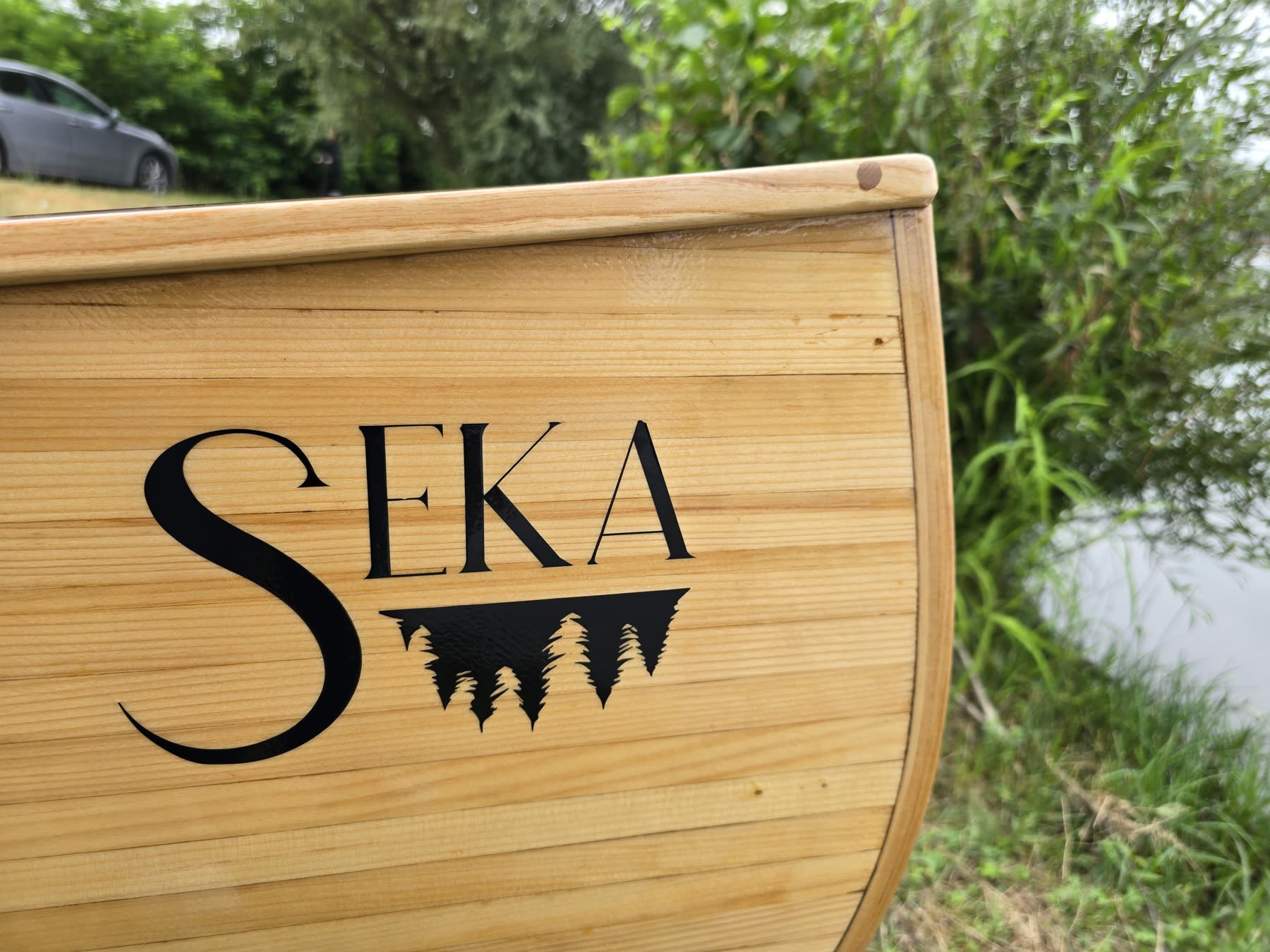
Seka logo on the bow, close-up
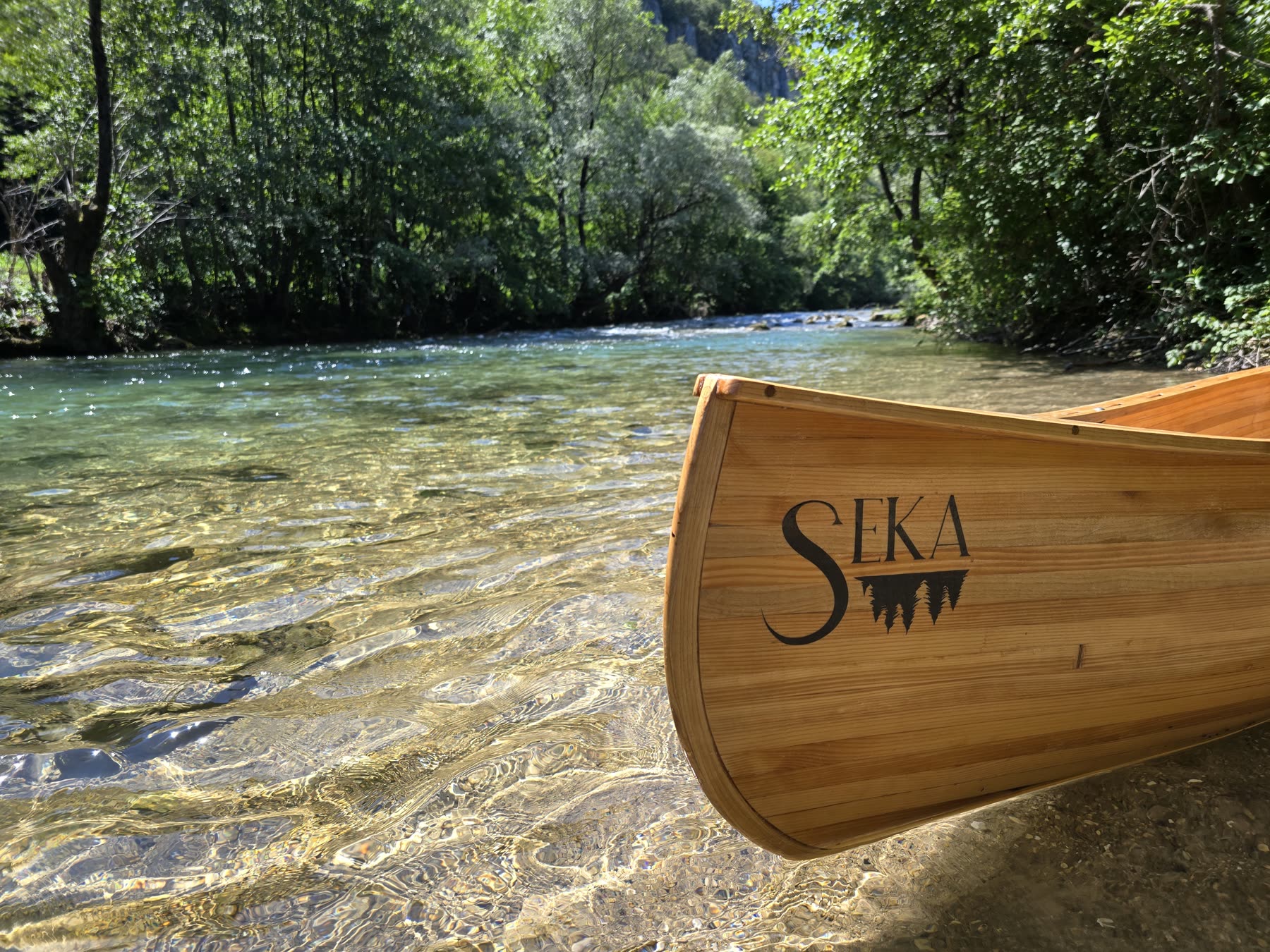
Bow with the Seka logo beside a clear river
Canoe seen from the stern, paddles crossed
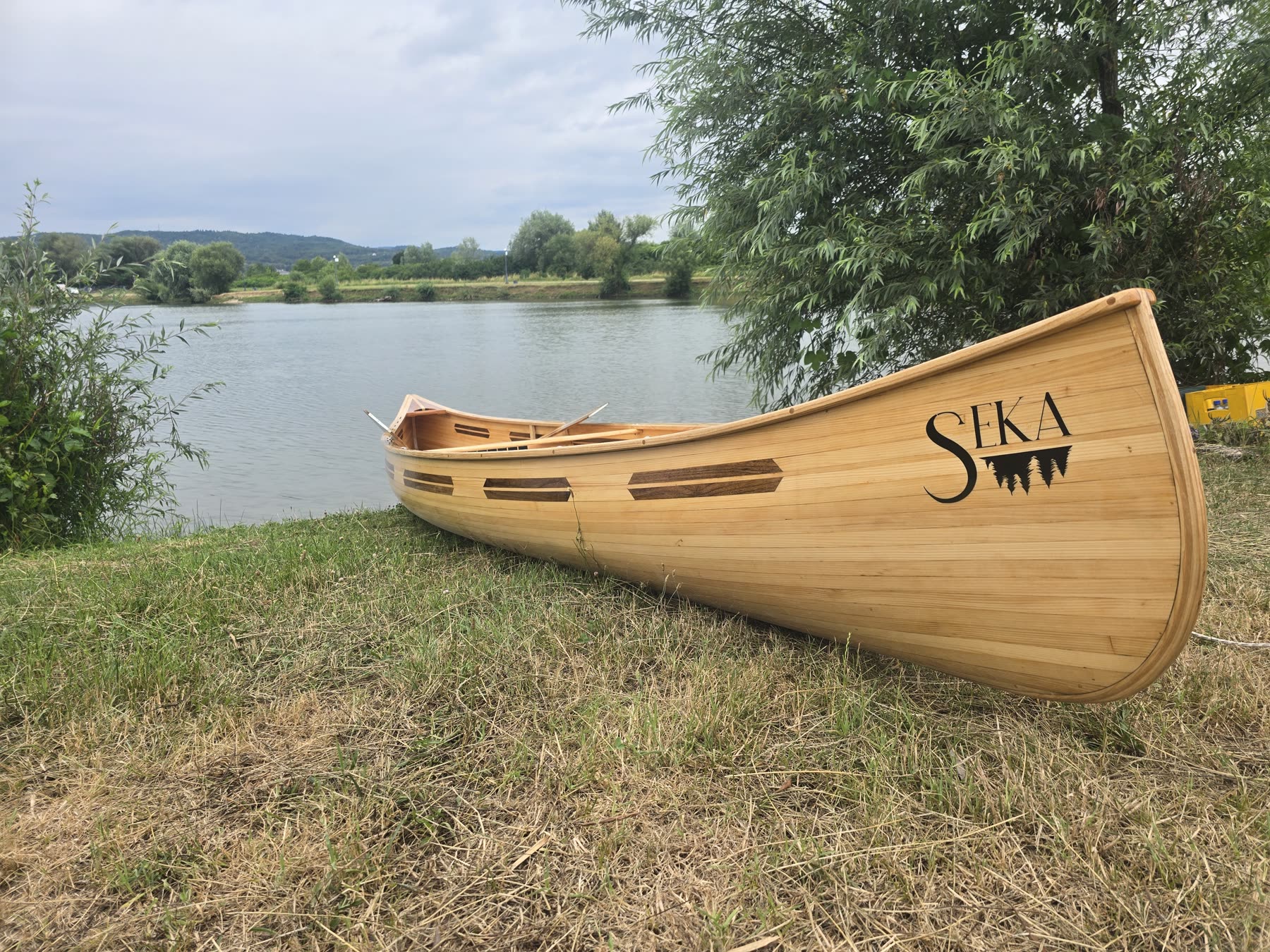
Bow of the canoe from a low angle, dark inlays along the side
Canoe on the grass beside a lake
Canoe from the side, dark stripes along the hull
The craftsman

Simo Lekić

The master craftsman behind Seka is Simo Lekić, a physical education and sports teacher by profession and a joiner with decades of experience. Every canoe is built by hand, strip by strip.

Dimensions and materials

Canoe specifications.

Length
470 cm
Width
100 cm
Weight
35 kg
Capacity
2 people
Load capacity
300 kg
Wood
Fir and beech
Material
Wood and fiberglassGlass cloth and epoxy resin
Workshop
Trn, Republika SrpskaBosnia and Herzegovina
Questions and answers

Frequently asked questions.

Are canoes in stock?

Yes, several canoes are currently in stock. To check availability and order, email info@kanuseka.com or message us on Viber at +387 65 840 453.

How much does the canoe weigh?

Seka weighs 35 kg. One person can carry it: on the shoulders, using the center thwart, or on a cart.

How many people does it carry?

The canoe carries 2 people. Its load capacity is 300 kg.

Can it handle rivers and rapids?

Yes. The hull is reinforced with fiberglass cloth and epoxy resin, so the canoe is suited to lakes, rivers and rapids.

How is the canoe transported?

On a standard car roof rack, with no trailer. The canoe is 470 cm long and weighs 35 kg: lift it onto the roof, strap it down and drive.

How do you maintain the canoe?

Lorem ipsum dolor sit amet.

Do you deliver abroad?

Yes, delivery abroad is possible, by arrangement. Get in touch by email at info@kanuseka.com or on Viber.

Where is the Seka canoe made?

In the workshop in Trn, Republika Srpska, Bosnia and Herzegovina. Every canoe is built by hand by master craftsman Simo Lekić.